
Quick Answer
Fractional CFO vs controller
How a controller and a CFO differ in duties, cost and timing, plus how to tell which role your business is missing right now.
The short answer
- A controller owns accuracy, the monthly close and internal controls.
- A CFO owns forward-looking work: cash planning, pricing, funding and strategy.
- Small businesses usually need CFO thinking plus a well-run close, not a full controller hire.
- Controllers typically cost less than CFOs, whether hired or fractional.
Side by side
Both matter. They solve different problems.
- Controller: reconciliations, close, accuracy, controls, clean reports
- CFO: cash forecast, pricing, profitability, funding, growth decisions
- Controller answers 'is this right?'
- CFO answers 'what should we do?'
Which are you missing?
If your reports feel wrong or arrive late, you have a controller problem. If your reports are fine but you still cannot decide anything from them, you have a CFO problem.
How LedgerDude covers both
The platform handles the close discipline — reconciliations, a locked period, a named reviewer — and the CFO work sits on top of it, reading only closed numbers.
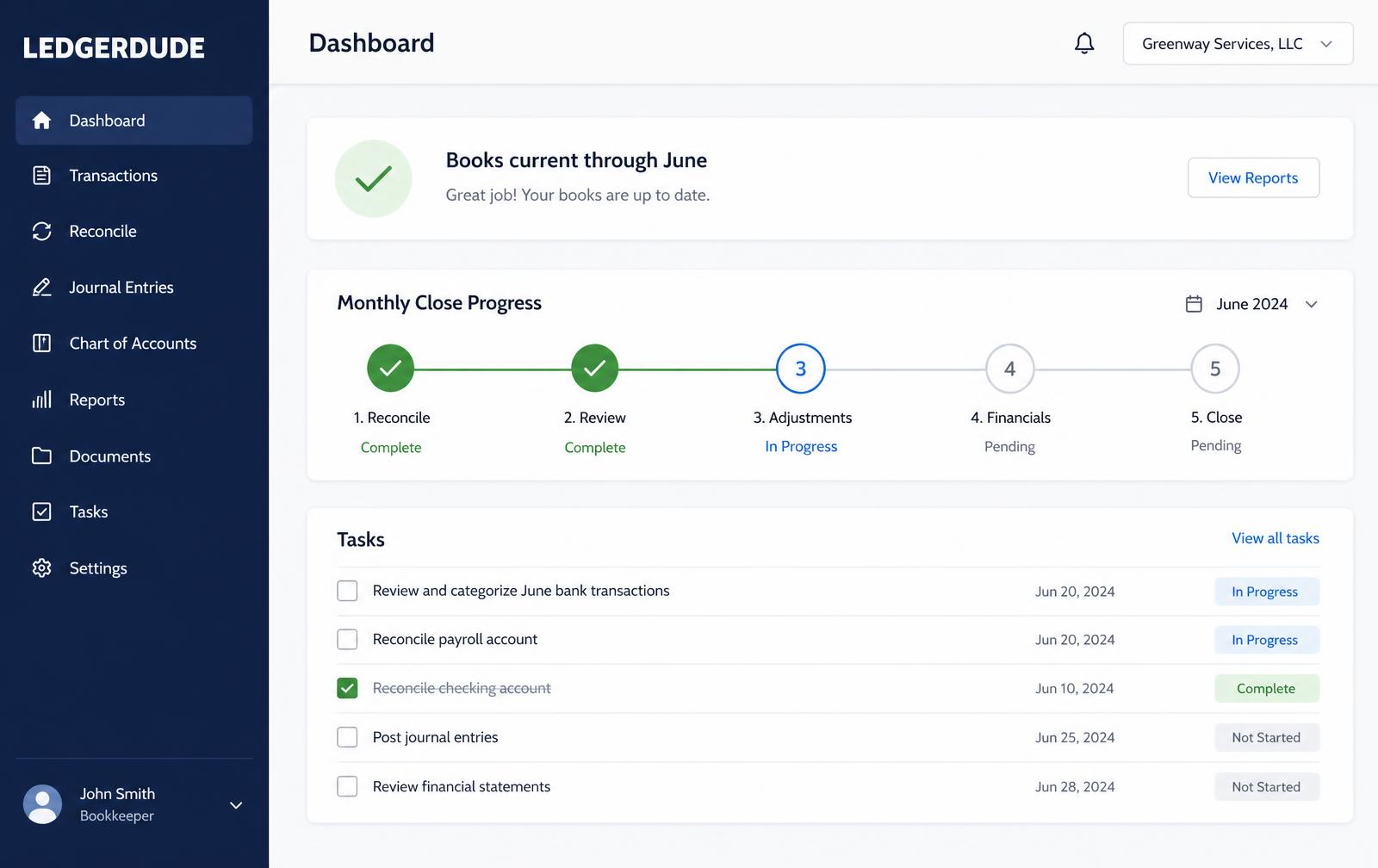
What you see inside LedgerDude
This is the page you get each month once your books are closed — the numbers behind every answer on this site.
In one sentence
A controller makes sure the numbers are right. A CFO decides what to do with them. Controllers look back; CFOs look forward.
Questions people ask
Can one person do both?
In a small business, often yes. The risk is that close work always crowds out planning work, so protect the planning time.
Which should I hire first?
Whichever is broken. Accurate late reports and useless timely reports are both dead ends.
Is a bookkeeper the same as a controller?
No. A bookkeeper records transactions; a controller owns the accuracy of the whole close.
What does this cost?
One flat monthly price. No hourly bills, no surprises. Founding plans start at $149 a month, and your rate stays locked.
Keep reading
What does a fractional CFO do?
A fractional CFO plans your cash, checks that your prices cover your costs, shows which work makes money, and puts numbers behind big decisions.
What is the difference between a bookkeeper and an accountant?
A bookkeeper records and reconciles what happened each month; an accountant interprets it and files your taxes. Most businesses need both, and the bookkeeper first.
All answers
Every question we have written a straight answer to.
Pricing
Flat monthly plans based on your revenue.
Want your books handled for you?
We read your receipts, match your bank activity, and close your books every month. You get one short list of questions and a dashboard that always tells the truth.