
Quick Answer
How do you calculate break-even for a small business?
The break-even formula for a small business, how to translate it into jobs or customers per week, and the mistakes that make the number too optimistic.
The short answer
- Break-even revenue equals fixed overhead divided by gross margin percentage.
- Owner pay must be included in overhead or the break-even point is understated.
- Convert the dollar figure into jobs, customers or calls per week so it is actionable.
- Recalculate whenever overhead or margin changes, at minimum every quarter.
The formula
Break-even revenue = fixed monthly overhead ÷ gross margin percentage. If overhead is $40,000 and gross margin is 45 percent, you need $88,889 in revenue that month before a dollar of profit exists.
Getting the inputs right
Two inputs, and both are commonly wrong.
- Overhead: rent, office pay, software, insurance, advertising, loan payments and a market wage for the owner
- Gross margin: revenue minus direct labor and materials, taken from your actual books
- Do not use last year's margin if pricing or wages have changed
- Do not leave owner compensation out; it is the most common error
Turn it into something you can manage
Divide break-even revenue by your average sale to get units. Divide by four to get a weekly target. A crew leader can act on eleven jobs a week; nobody acts on $88,889.
Break-even is not the goal
It is the floor. Add your target profit to overhead before dividing, and you get the revenue that produces the year you actually want.
Illustration: from overhead to a weekly target
- Fixed monthly overhead
- $40,000
- Gross margin
- 45%
- Break-even revenue
- $88,889
- Average sale
- $1,950
- Jobs needed per week
- ≈ 11
What this tells you: Example numbers. Adding a $10,000 monthly profit target raises the weekly requirement to about 14 jobs.
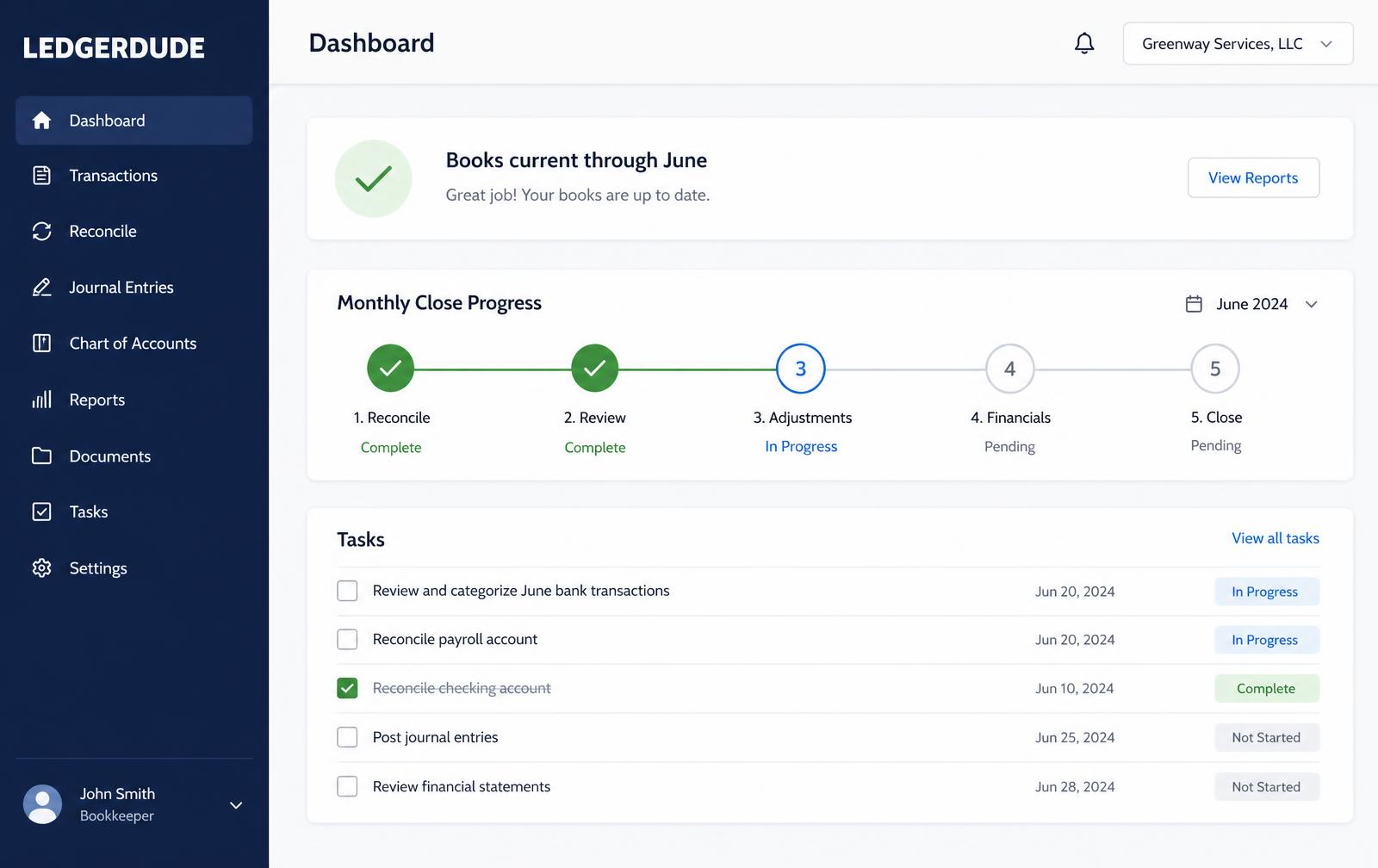
What you see inside LedgerDude
This is the page you get each month once your books are closed — the numbers behind every answer on this site.
In one sentence
Divide your fixed monthly overhead by your gross margin percentage to get the revenue you need each month just to cover costs.
Questions people ask
Is break-even the same as cash break-even?
No. Cash break-even also accounts for loan principal, equipment purchases and receivable timing, and it is usually a higher number.
How often should I recalculate?
Quarterly, and immediately after adding payroll, rent or a vehicle payment.
What if my margin varies by service line?
Use a weighted average based on your actual revenue mix, and recalculate if the mix shifts.
What does this cost?
One flat monthly price. No hourly bills, no surprises. Founding plans start at $149 a month, and your rate stays locked.
Keep reading
How do contractors manage cash flow?
Forecast cash weekly for thirteen weeks, invoice the day work is complete, collect deposits on material-heavy jobs, and keep a cash floor equal to six to eight weeks of outflow.
What is the difference between a CFO, a controller and a bookkeeper?
A bookkeeper records what happened, a controller makes sure it is accurate and closed on time, and a CFO uses it to decide what to do next.
All answers
Every question we have written a straight answer to.
Pricing
Flat monthly plans based on your revenue.
Want your books handled for you?
We read your receipts, match your bank activity, and close your books every month. You get one short list of questions and a dashboard that always tells the truth.