
Quick Answer
How much should an HVAC company charge per hour?
The math behind an HVAC billable hourly rate: loaded labor cost, billable hour percentage, overhead recovery and target profit.
The short answer
- Never set your rate by copying a competitor; you cannot see their cost structure.
- Fully loaded tech cost is typically $65 to $95 an hour once taxes, vehicle, insurance and unbillable time are included.
- Most residential HVAC companies need $125 to $200 an hour billed to hit healthy margin.
- The number that breaks most rates is billable hour percentage — techs bill far fewer hours than they are paid for.
The four-step math
Build the rate from your own numbers in this order.
- 1. True labor cost: wage plus payroll taxes, benefits, truck, fuel, insurance, tools
- 2. Billable hours: paid hours minus drive time, warehouse, training and callbacks
- 3. Overhead per billable hour: total overhead ÷ total billable hours
- 4. Add target margin: divide by (1 − your target gross margin)
The billable-hour trap
A tech paid for 40 hours often bills 26 to 30. If you price against 40, you are giving away a quarter of your labor. Count the real number before you touch the rate.
Flat rate versus hourly
Most successful residential companies quote flat prices per task but build those prices from an hourly rate underneath. The customer gets a clear number; you keep the margin math.
Raising the rate without losing customers
Move in steps, lead with the maintenance plan, and watch close rate weekly. A rate increase that drops close rate a few points almost always still nets more profit — but you need to see the numbers to know.
Illustration: building one tech's rate
- Wage
- $32.00 / hour
- Payroll taxes and benefits
- +$8.00
- Truck, fuel, insurance, tools
- +$11.00
- Cost per paid hour
- $51.00
- Billable hours (28 of 40 paid)
- cost per billable hour = $72.86
- Overhead per billable hour
- +$34.00 = $106.86
- At a 45% target gross margin
- bill $194 / hour
What this tells you: Example numbers. The jump from $51 to $194 is not greed — it is what covers the truck, the office and a slow February.
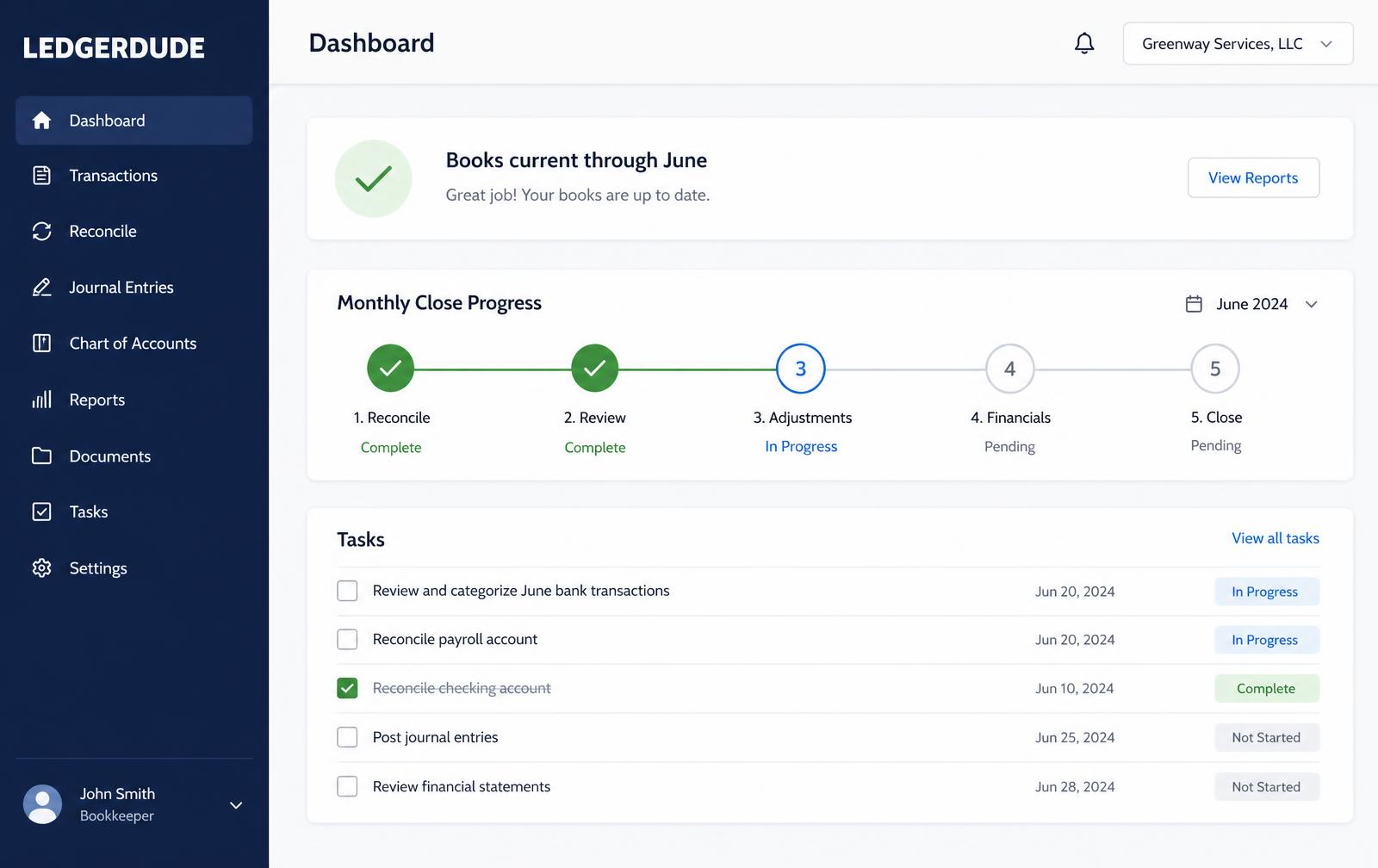
What you see inside LedgerDude
This is the page you get each month once your books are closed — the numbers behind every answer on this site.
In one sentence
Work backward from the true cost of an hour in the truck — usually $65 to $95 fully loaded — then add your target margin, which puts most residential rates between $125 and $200 an hour.
Questions people ask
Should I charge a diagnostic or trip fee?
Yes. Drive time and diagnosis are real cost. Charging for them protects margin and filters price-only callers.
How often should I review my rate?
Twice a year, and immediately after any equipment or wage cost jump.
Is overtime billed at the same rate?
It should not be. Overtime raises your labor cost, so after-hours pricing needs its own rate.
What if my market will not pay that?
Then the fix is the cost side or the mix — more maintenance agreements and higher-value work — not accepting a rate below cost.
What does this cost?
One flat monthly price. No hourly bills, no surprises. Founding plans start at $149 a month, and your rate stays locked.
Keep reading
What is a good profit margin for an HVAC business?
Aim for 45% to 55% gross margin on service, 30% to 40% on installs, and 8% to 12% net profit for the whole company.
How do I manage HVAC cash flow in the slow season?
Set aside a fixed share of every peak-season week, go into the slow months with 8 to 13 weeks of cash, and know your monthly break-even before the phones quiet down.
All answers
Every question we have written a straight answer to.
Pricing
Flat monthly plans based on your revenue.
Want your books handled for you?
We read your receipts, match your bank activity, and close your books every month. You get one short list of questions and a dashboard that always tells the truth.