
Quick Answer
How do I manage HVAC cash flow in the slow season?
A simple seasonal cash plan for heating and air contractors: what to hold back from peak season, how much cash to carry, and what to cut first.
The short answer
- HVAC cash problems are almost always caused in the busy season, not the slow one.
- Carry 8 to 13 weeks of operating cash into a slow stretch.
- Know your monthly break-even so you can tell a quiet month from a losing month.
- Maintenance agreements are the most reliable way to put revenue into the valleys.
The busy season causes the problem
July looks great, so a truck gets bought and payroll grows. October arrives with the same fixed costs and half the calls. The mistake was made in July, not October.
The set-aside rule
Pick a percentage of peak-season collections and move it to a separate account every week. Treat it like payroll tax — untouchable. Most HVAC companies need 10 to 20 percent held back through the peak.
- Move it weekly, not monthly, so it never gets spent
- Hold it in a separate bank account you do not carry a card for
- Size it from last year's slow-month shortfall, not a guess
Know your break-even
Break-even is monthly overhead ÷ gross margin percentage. If overhead is $45,000 and gross margin is 42 percent, you need about $107,000 of revenue to cover the month. Now a slow month is measurable instead of scary.
Fill the valley on purpose
Slow months are the right time for maintenance visits, indoor air quality work, duct sealing, commercial filter routes and pre-season tune-up campaigns to agreement customers.
What to cut, in order
Discretionary spend first, then owner draws, then hours — never techs you will have to rehire in April. Cutting crew to save a slow month often costs more than the slow month did.
Illustration: a set-aside plan for a $1.6M HVAC company
- Peak-season collections (May–Sept)
- $880,000
- Set aside 15% weekly
- $132,000
- Monthly break-even revenue
- $104,000
- Typical slow-month shortfall
- $38,000 per month
- Months of shortfall covered
- about 3.5
What this tells you: Example numbers. A 15% weekly habit in the summer removed the winter line of credit entirely.
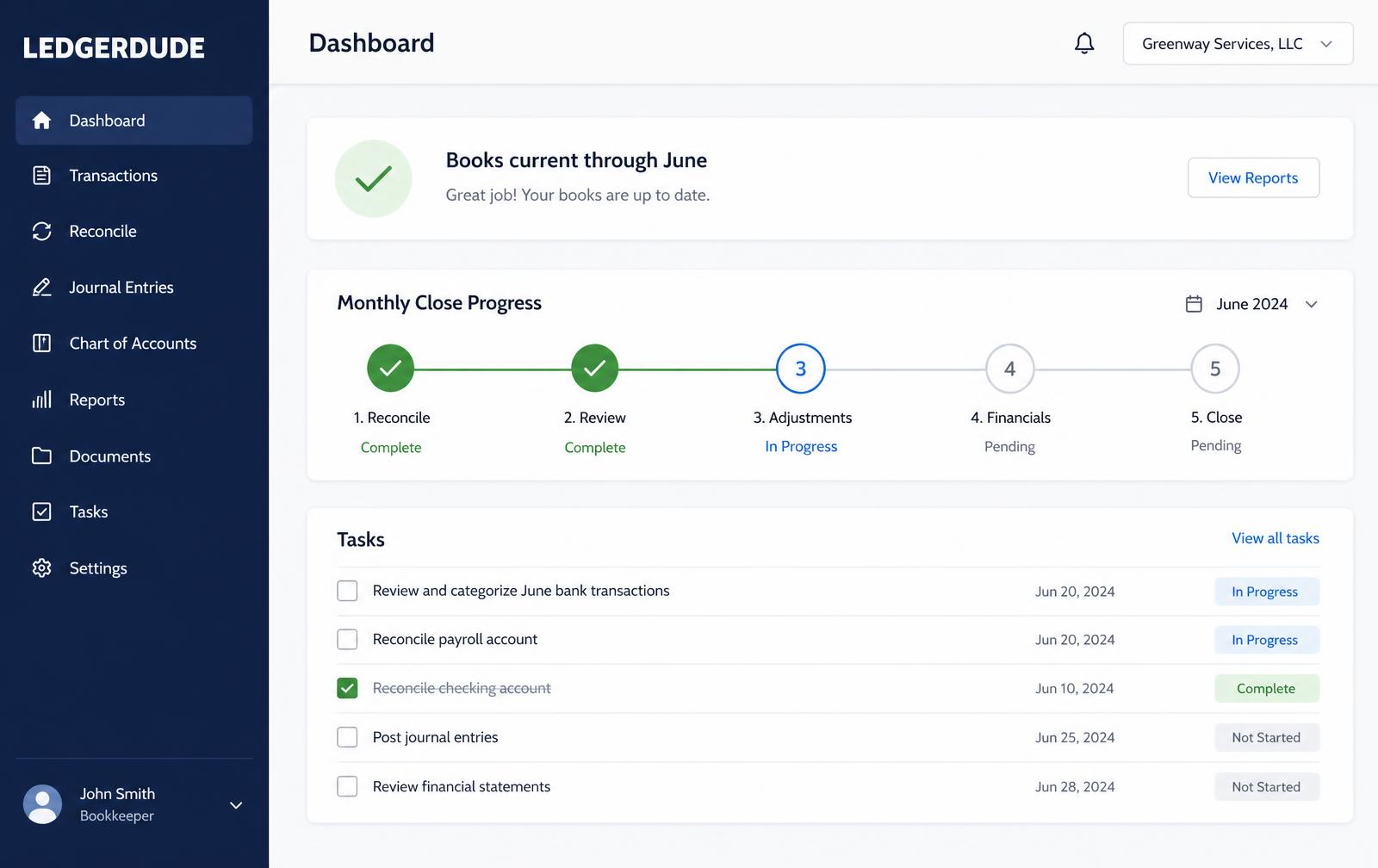
What you see inside LedgerDude
This is the page you get each month once your books are closed — the numbers behind every answer on this site.
In one sentence
Set aside a fixed share of every peak-season week, go into the slow months with 8 to 13 weeks of cash, and know your monthly break-even before the phones quiet down.
Questions people ask
Is a line of credit a bad idea?
No — it is good insurance and a bad plan. Have one, price it before you need it, and build the set-aside so you rarely draw on it.
How many weeks of cash should I hold?
Eight weeks is a floor; 13 weeks going into your slowest stretch lets you make decisions calmly.
Should I still take owner pay in slow months?
Yes, at a steady planned amount. Erratic draws are how owners lose track of whether the business is actually profitable.
Does financing equipment help cash flow?
It smooths the outflow, but each payment is fixed cost in every slow month. Check the payment against your slow-month break-even before signing.
What does this cost?
One flat monthly price. No hourly bills, no surprises. Founding plans start at $149 a month, and your rate stays locked.
Keep reading
What is a good profit margin for an HVAC business?
Aim for 45% to 55% gross margin on service, 30% to 40% on installs, and 8% to 12% net profit for the whole company.
How much should an HVAC company charge per hour?
Work backward from the true cost of an hour in the truck — usually $65 to $95 fully loaded — then add your target margin, which puts most residential rates between $125 and $200 an hour.
All answers
Every question we have written a straight answer to.
Pricing
Flat monthly plans based on your revenue.
Want your books handled for you?
We read your receipts, match your bank activity, and close your books every month. You get one short list of questions and a dashboard that always tells the truth.