
Learning
Tracking contractors for 1099s all year long
Who gets a 1099, what to collect before the first payment, and how to keep the January filing to a five-minute report.
The short answer
- Collect a W-9 before the first payment, always.
- Most unincorporated contractors paid $600 or more in a year require a 1099-NEC.
- Payments made by card or third-party network are generally reported by the processor instead.
- Tagging payments as they happen turns January into a report rather than a reconstruction.
Who gets one
Individuals, sole proprietors and most LLCs paid for services generally require a 1099-NEC once payments reach the annual threshold. Corporations are usually exempt, with notable exceptions such as attorneys.
What to collect and when
A signed W-9 before the first payment gives you the legal name, entity type and taxpayer ID. Chasing it after the relationship ends is where filings fail.
Payment method changes the answer
Payments made by credit card or through a third-party settlement network are generally reported by the processor, so including them in your 1099 can double-report the contractor. Track by payment method, not only by vendor.
Keeping it current
We check contractor setup during each monthly close: any new vendor paid for services without a W-9 becomes a close question, so nothing accumulates.
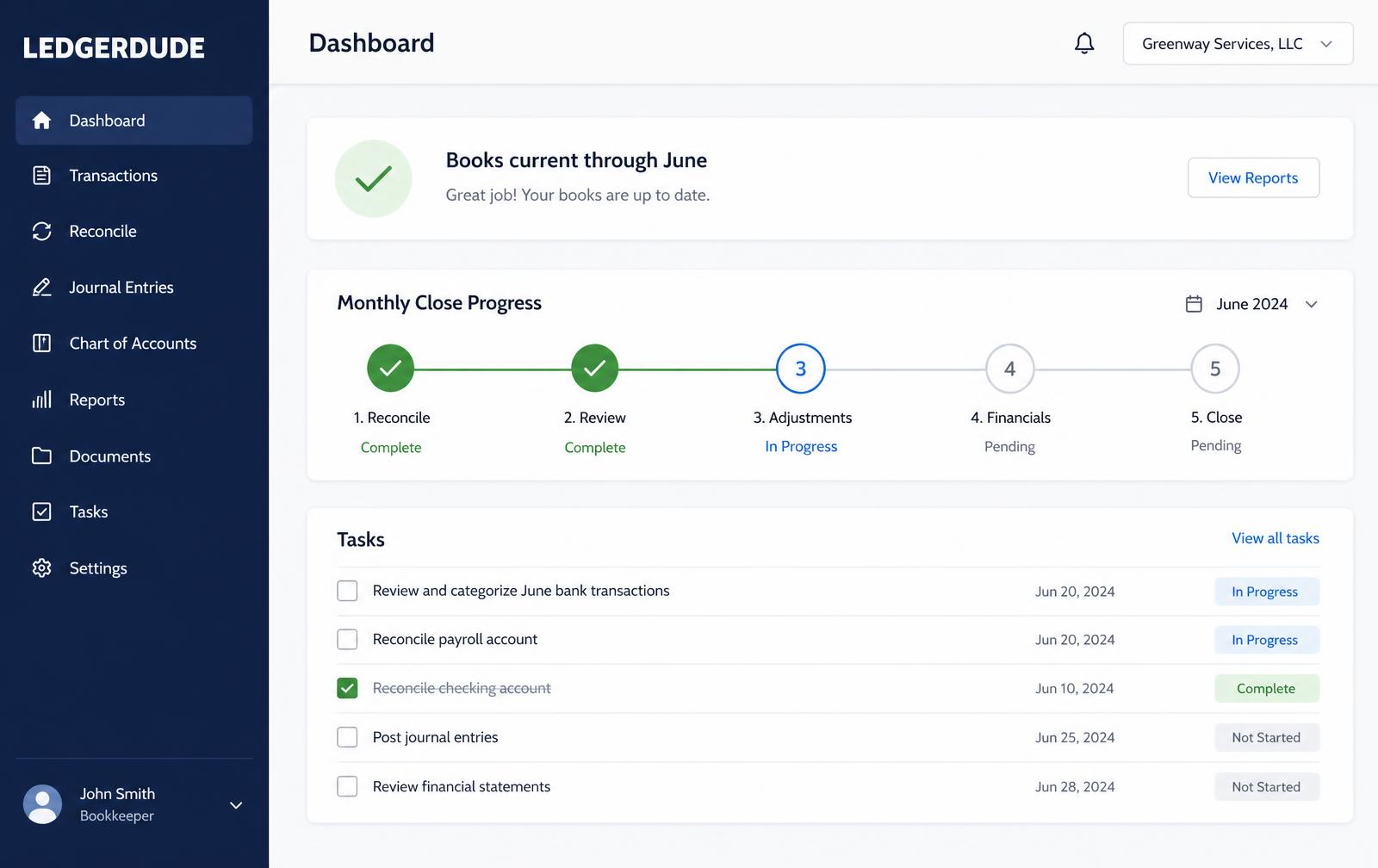
What you see inside LedgerDude
One page with your money in and money out, your cash on hand, and a short list of questions when we need your help.
Questions people ask
What is the reporting threshold?
Generally $600 in a calendar year for services, though thresholds and forms change; confirm the current year rules with your CPA.
Do I 1099 an LLC?
Usually yes unless it is taxed as a corporation, which is exactly what the W-9 tells you.
What if I paid through a payment app?
Third-party networks generally report those payments, so they typically should not also appear on your 1099.
What does this cost?
One flat monthly price. No hourly bills, no surprises. Founding plans start at $149 a month, and your rate stays locked.
Keep reading
A month-end close checklist you can actually run
The full checklist a small business close should pass every month, in the order the steps depend on each other.
Why profitable businesses run out of cash
The four things that consume cash without touching profit, and how to build a simple thirteen-week cash view from your books.
Separating business and personal money
Why mixed spending costs real money at tax time, how to record it correctly when it happens, and how to stop it.
All lessons
The whole learning center.
Guide libraries
Accounting, QuickBooks and catch-up guides.
Answers
Straight answers to the questions owners ask us.
Want your books handled for you?
We read your receipts, match your bank activity, and close your books every month. You get one short list of questions and a dashboard that always tells the truth.