
Learning
Why profitable businesses run out of cash
The four things that consume cash without touching profit, and how to build a simple thirteen-week cash view from your books.
The short answer
- Loan principal, owner draws, inventory purchases and equipment all consume cash without reducing profit.
- Cash runway is cash divided by average monthly net burn — the single most useful survival number.
- A thirteen-week cash view is enough for most small businesses.
- Receivables aging is a cash tool, not an accounting formality.
The four silent cash drains
Profit is calculated after expenses, but four large uses of cash are not expenses at all. This is why a profitable month can end with less money than it started with.
- Loan principal payments reduce a liability, not profit
- Owner draws are equity movements
- Inventory purchases become an asset until sold
- Equipment purchases are capitalized and depreciate slowly
Building a thirteen-week view
Start with today's bank balance. Add expected collections from your receivables aging by week, subtract payroll, rent, loans and payables by due date. Thirteen weeks is far enough to act and close enough to be accurate.
Fixing a cash problem
Cash problems are collection problems more often than sales problems. Tightening terms, invoicing the day work completes and calling at day 31 usually beats cutting costs.
Profitable month, negative cash
- Net profit
- $18,400
- Loan principal paid
- −$6,200
- Owner draws
- −$12,000
- Inventory purchased
- −$9,800
- Equipment down payment
- −$4,500
- Net change in cash
- −$14,100
What this tells you: Every line below profit is real money leaving. None of it appears on the profit and loss statement.
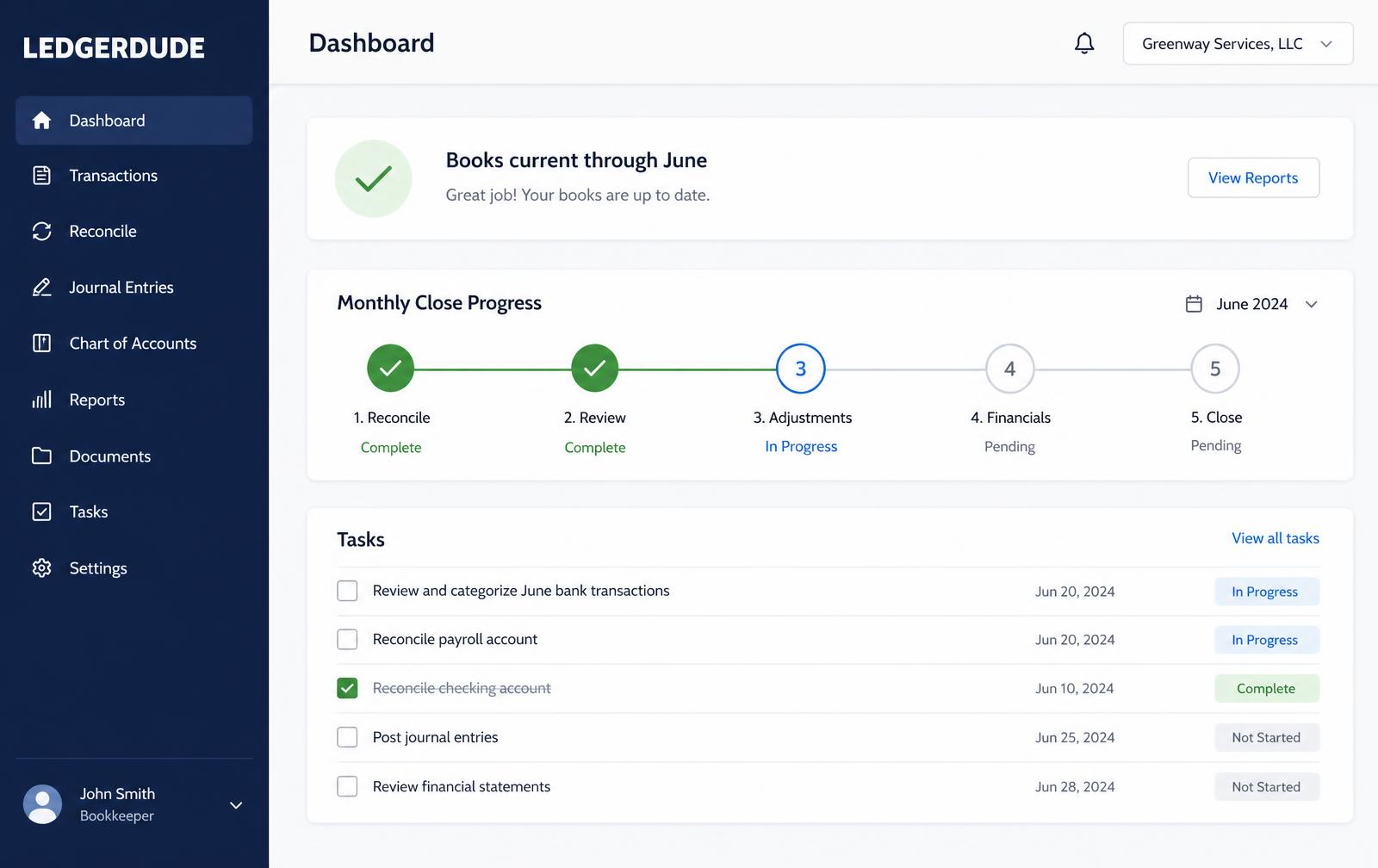
What you see inside LedgerDude
One page with your money in and money out, your cash on hand, and a short list of questions when we need your help.
Questions people ask
What is a healthy cash runway?
Three months of operating costs is a common floor; seasonal businesses should hold more going into the slow season.
Should owner draws be reduced first?
Often yes, because they are usually the largest discretionary cash use, and unlike payroll they can flex month to month.
Do I need a formal cash flow statement?
For lenders, yes. For managing the week, a thirteen-week forecast is more useful.
What does this cost?
One flat monthly price. No hourly bills, no surprises. Founding plans start at $149 a month, and your rate stays locked.
Keep reading
A month-end close checklist you can actually run
The full checklist a small business close should pass every month, in the order the steps depend on each other.
Separating business and personal money
Why mixed spending costs real money at tax time, how to record it correctly when it happens, and how to stop it.
Tracking contractors for 1099s all year long
Who gets a 1099, what to collect before the first payment, and how to keep the January filing to a five-minute report.
All lessons
The whole learning center.
Guide libraries
Accounting, QuickBooks and catch-up guides.
Answers
Straight answers to the questions owners ask us.
Want your books handled for you?
We read your receipts, match your bank activity, and close your books every month. You get one short list of questions and a dashboard that always tells the truth.