
Learning
A month-end close checklist you can actually run
The full checklist a small business close should pass every month, in the order the steps depend on each other.
The short answer
- A close is finished when every account is reconciled, uncategorized is zero and a reviewer has signed off.
- Order matters: bank and card reconciliation before reporting, always.
- Loans, payroll liabilities and clearing accounts are where most errors hide.
- Target ten business days or fewer from month end to delivered reports.
Before you reconcile
Get everything into the ledger first, or you will reconcile twice.
- Import and categorize all bank, card and loan activity
- Post receipts and match them to transactions
- Enter or import payroll for the period
- Record accruals and prepaid amortization
Reconcile everything
Every bank account, every credit card, every loan and every merchant clearing account gets proven against a statement. If an account has no statement, it needs a documented balance source.
Balance sheet review
Scan every balance sheet line and ask whether you can explain it. Undeposited funds, opening balance equity, payroll liabilities and 'ask my accountant' accounts should all be zero or explainable.
Review and deliver
A second person reviews the close, then reports and a written summary go out. Recording who reviewed and when is what turns a close into an audit trail.
What you see inside LedgerDude
One page with your money in and money out, your cash on hand, and a short list of questions when we need your help.
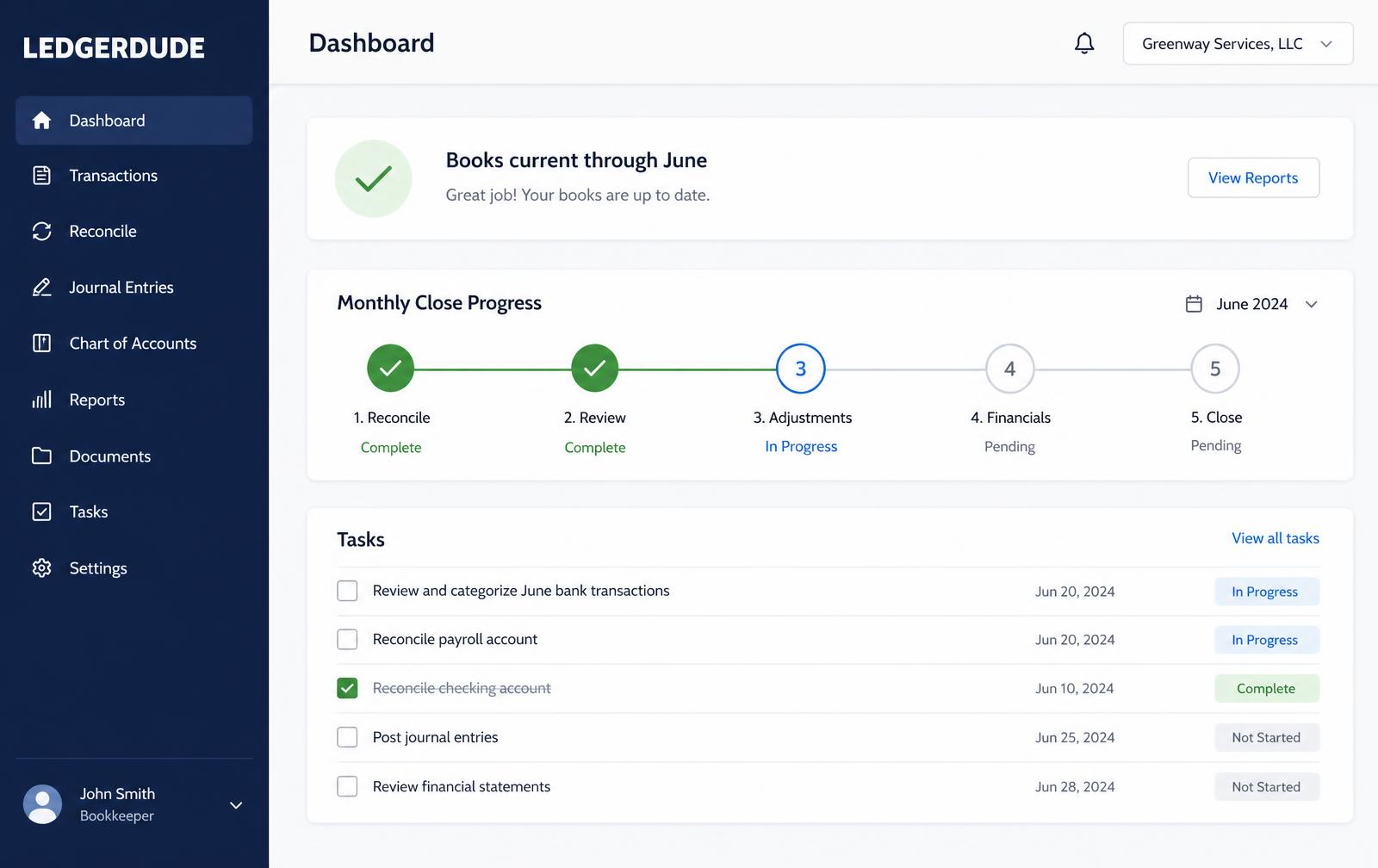
How to close the month
- 1
Complete the ledger
Import and categorize all activity, post receipts, enter payroll.
- 2
Reconcile
Prove every bank, card, loan and clearing account against a statement.
- 3
Adjust
Post depreciation, accruals, prepaid amortization and loan splits.
- 4
Review the balance sheet
Explain every line; clear anything unexplained.
- 5
Sign off
Have a second person review, then deliver reports and the summary.
Questions people ask
How long should a close take?
Ten business days or fewer for most small businesses. Under seven is achievable once documentation habits are in place.
Who should review the close?
Someone other than the person who did the work. Separation of preparation and review is the point.
What if a statement arrives late?
Close everything else, note the open item and finish that reconciliation the moment the statement lands.
What does this cost?
One flat monthly price. No hourly bills, no surprises. Founding plans start at $149 a month, and your rate stays locked.
Keep reading
Why profitable businesses run out of cash
The four things that consume cash without touching profit, and how to build a simple thirteen-week cash view from your books.
Separating business and personal money
Why mixed spending costs real money at tax time, how to record it correctly when it happens, and how to stop it.
Tracking contractors for 1099s all year long
Who gets a 1099, what to collect before the first payment, and how to keep the January filing to a five-minute report.
All lessons
The whole learning center.
Guide libraries
Accounting, QuickBooks and catch-up guides.
Answers
Straight answers to the questions owners ask us.
Want your books handled for you?
We read your receipts, match your bank activity, and close your books every month. You get one short list of questions and a dashboard that always tells the truth.