
Quick Answer
What goes in an HVAC business plan?
What an HVAC business plan needs, focused on the financial model: seasonal revenue, loaded labor cost, break-even point and a monthly cash forecast.
The short answer
- Lenders read the financial section first; the narrative sections mostly set context.
- HVAC revenue must be modeled by month, not divided evenly, because of two peak seasons.
- Break-even should be stated in calls per week or installs per month, not just dollars.
- A plan without a cash forecast cannot answer the question a lender actually asks.
The sections a lender expects
Keep it short and specific. Fifteen focused pages beat sixty vague ones.
- What you do and who you serve, by service area and customer type
- Service mix: install, service, maintenance agreements
- Staffing and trucks, with the ramp-up timeline
- Marketing plan and expected cost per booked call
- Financial plan: revenue by month, margin by line, overhead, break-even and cash
Model the seasons honestly
A yearly revenue figure spread evenly across twelve months hides the exact problem HVAC owners face. Model July and January separately and show how the peak funds the valley.
State break-even in work, not dollars
Overhead divided by gross margin per call gives the number of calls per week that keep the doors open. That number is memorable and manageable in a way that a revenue target is not.
Show the cash, month by month
Profit and cash separate fast in this trade because of equipment purchases, truck payments and receivables. A twelve-month cash forecast with a low point marked is the single most persuasive page in the plan.
Illustration: break-even in calls per week
- Monthly overhead
- $46,000
- Average service ticket
- $540
- Gross margin per ticket at 48%
- $259
- Tickets needed per month
- 178
- Calls per week to break even
- ≈ 41
What this tells you: Example numbers. Forty-one calls a week is something a dispatcher can act on; a revenue target is not.
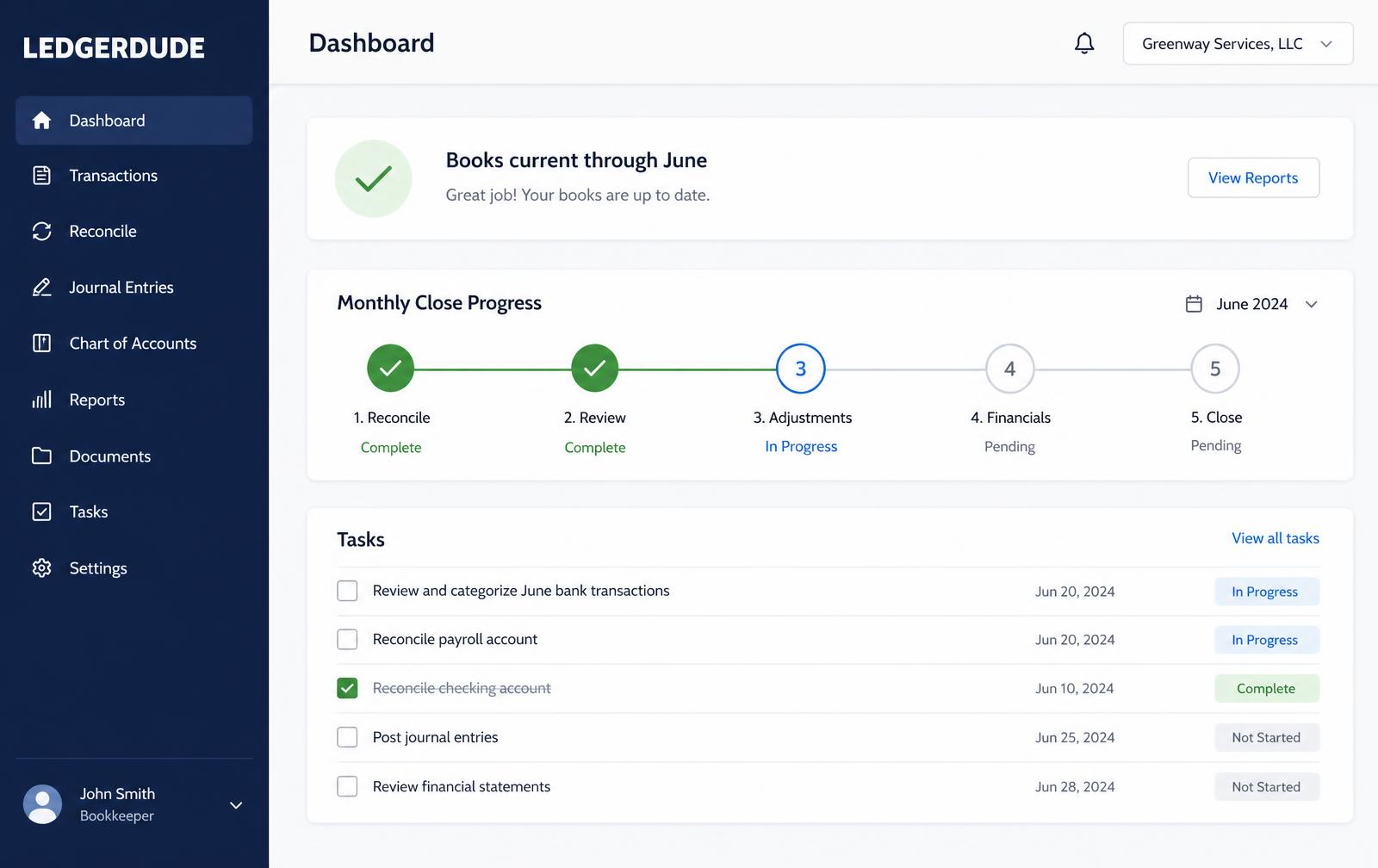
What you see inside LedgerDude
This is the page you get each month once your books are closed — the numbers behind every answer on this site.
In one sentence
An HVAC business plan needs a market and service mix, a staffing and truck plan, and a financial plan with seasonal revenue, loaded labor cost, break-even and a cash forecast.
Questions people ask
How long should an HVAC business plan be?
Ten to twenty pages plus financial schedules. Lenders skim the narrative and study the numbers.
Do I need a plan if I am not borrowing?
The financial model is worth building either way. It tells you how many trucks your overhead can carry before you buy the third one.
What financial statements should I include?
A monthly profit and loss projection for year one, an annual view for years two and three, a cash forecast and a balance sheet.
What does this cost?
One flat monthly price. No hourly bills, no surprises. Founding plans start at $149 a month, and your rate stays locked.
Keep reading
What KPIs should an HVAC company track?
Track average ticket, gross margin by revenue line, billable hour percentage, close rate, maintenance agreement count and weeks of cash on hand.
How do I manage HVAC cash flow in the slow season?
Set aside a fixed share of every peak-season week, go into the slow months with 8 to 13 weeks of cash, and know your monthly break-even before the phones quiet down.
How do you grow an HVAC business?
Growth comes from four levers in order: raise average ticket, raise close rate, add maintenance agreements, then add a truck once margin and cash can carry the ramp-up.
All answers
Every question we have written a straight answer to.
Pricing
Flat monthly plans based on your revenue.
Want your books handled for you?
We read your receipts, match your bank activity, and close your books every month. You get one short list of questions and a dashboard that always tells the truth.