
Accounting basics
Cash vs accrual accounting: which one should you use?
The real difference between cash and accrual accounting, when each is required, and why many small businesses manage on one and file on the other.
The short answer
- Cash accounting records money when it moves. Accrual records revenue when earned and expenses when incurred.
- Accrual shows a truer picture of profitability, especially with invoices, inventory or prepayments.
- Many small businesses file taxes on cash basis while managing internally on accrual.
- Inventory-carrying businesses generally need accrual to see real margin.
What each method actually does
Cash basis says December was a great month because a customer finally paid. Accrual says the work was done in October, so October gets the revenue. Same money, different story about which month earned it.
When accrual is worth it
If you invoice customers, carry inventory, collect deposits or pay bills on terms, accrual is the only way to see whether the business is actually profitable in the month the work happened.
- You bill customers and get paid 30 to 60 days later
- You hold inventory or work in progress
- You collect retainers or deposits in advance
- A lender or investor is reading your statements
Running both
In QuickBooks Online you can switch report basis with one setting, so a properly kept accrual ledger gives you both views. The reverse is not true: a cash-only ledger cannot produce accrual reporting without rework.
The same quarter, two ways
- Accrual revenue
- $240,000
- Cash collected
- $186,000
- Accrual expenses
- $188,000
- Cash paid
- $203,000
- Accrual profit
- $52,000
- Cash profit
- −$17,000
What this tells you: The business earned $52,000 and still had a bad cash quarter. Both numbers are true; only using one of them leads to the wrong decision.
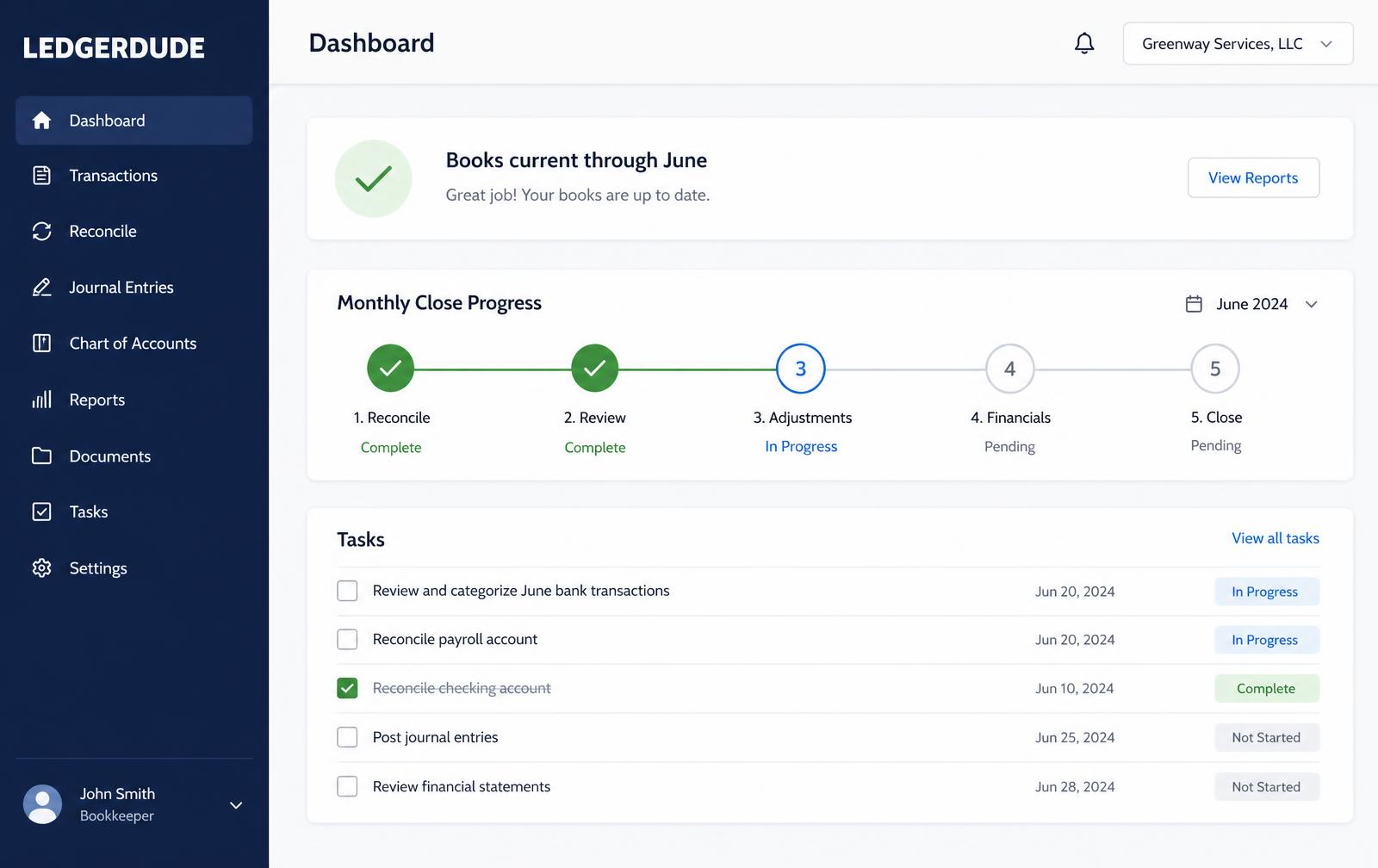
What you see inside LedgerDude
One page with your money in and money out, your cash on hand, and a short list of questions when we need your help.
Questions people ask
Which method does the IRS require?
Many small businesses may use cash basis, but businesses with inventory or above certain receipt thresholds generally must use accrual. Your CPA makes the call for filing.
Can I switch later?
Yes, though changing tax accounting method requires a filing. Switching internal reporting basis is easy if your ledger is kept on accrual.
Which do lenders want?
Accrual, almost always, plus a cash flow view alongside it.
What does this cost?
One flat monthly price. No hourly bills, no surprises. Founding plans start at $149 a month, and your rate stays locked.
Keep reading
Building a chart of accounts you will actually use
How to structure a chart of accounts so your reports answer real questions — without ending up with two hundred accounts nobody understands.
Debits and credits, explained without the jargon
What debits and credits actually mean, why every entry has two sides, and how to tell in seconds whether an entry increases or decreases an account.
How to read a profit and loss statement
A line-by-line walkthrough of the profit and loss statement and the four checks that catch most bookkeeping errors in under five minutes.
All accounting guide library guides
Every guide in this library.
All guide libraries
Accounting, QuickBooks and catch-up.
Our services
Hand the whole thing to us instead.
Want your books handled for you?
We read your receipts, match your bank activity, and close your books every month. You get one short list of questions and a dashboard that always tells the truth.