
Accounting basics
Debits and credits, explained without the jargon
What debits and credits actually mean, why every entry has two sides, and how to tell in seconds whether an entry increases or decreases an account.
The short answer
- A debit is the left side of an entry and a credit is the right side. Neither means good or bad.
- Debits increase assets and expenses. Credits increase liabilities, equity and income.
- Every entry must balance: total debits equal total credits.
- Your bank calling a deposit a credit is the bank's view of its own books, not yours.
The one rule that makes it click
Accounts fall into five buckets: assets, liabilities, equity, income and expenses. Debits increase the first and last of those — assets and expenses. Credits increase the middle three. That is the whole rule.
- Buy supplies with cash: debit supplies expense, credit cash
- Make a sale on account: debit accounts receivable, credit income
- Take a loan: debit cash, credit loan payable
- Owner takes money out: debit owner draws, credit cash
Why the bank confuses everyone
When your bank says your account was credited, it is describing its own ledger, where your money is a liability it owes you. On your books the same deposit is a debit to cash. Both are correct from their own side.
Where it matters in real bookkeeping
Journal entries without posting direction are the most common cause of wrong financial statements. If a journal line does not carry debit or credit, software may treat both sides as positive and double-count the entry. We store posting type on every imported line for exactly this reason.
One month-end entry, both sides
- Debit: depreciation expense
- $1,250
- Credit: accumulated depreciation
- $1,250
- Effect on profit
- −$1,250
- Effect on cash
- $0
What this tells you: A perfectly balanced entry can lower profit without touching cash. That is why profit and cash never match.
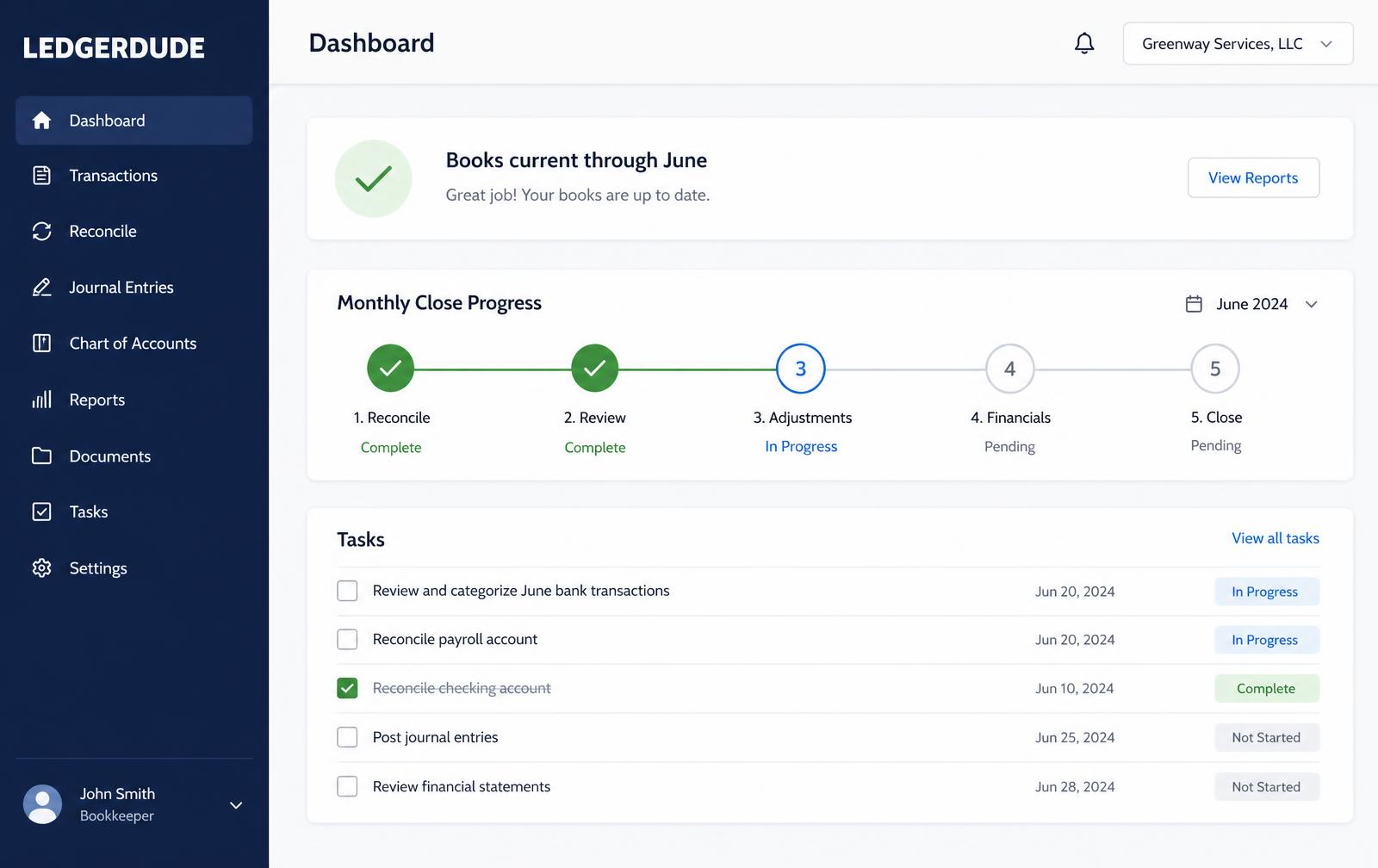
What you see inside LedgerDude
One page with your money in and money out, your cash on hand, and a short list of questions when we need your help.
Questions people ask
Is a credit good or bad?
Neither. It is simply the right side of an entry. A credit to income is good; a credit to cash means money left.
Why must debits equal credits?
Because every transaction has a source and a destination. If they do not match, something was left out.
Do I need to know this to run a business?
Not in detail, but knowing that every entry has two sides helps you ask better questions about your reports.
What does this cost?
One flat monthly price. No hourly bills, no surprises. Founding plans start at $149 a month, and your rate stays locked.
Keep reading
Cash vs accrual accounting: which one should you use?
The real difference between cash and accrual accounting, when each is required, and why many small businesses manage on one and file on the other.
Building a chart of accounts you will actually use
How to structure a chart of accounts so your reports answer real questions — without ending up with two hundred accounts nobody understands.
How to read a profit and loss statement
A line-by-line walkthrough of the profit and loss statement and the four checks that catch most bookkeeping errors in under five minutes.
All accounting guide library guides
Every guide in this library.
All guide libraries
Accounting, QuickBooks and catch-up.
Our services
Hand the whole thing to us instead.
Want your books handled for you?
We read your receipts, match your bank activity, and close your books every month. You get one short list of questions and a dashboard that always tells the truth.