
Reports
How to read a profit and loss statement
A line-by-line walkthrough of the profit and loss statement and the four checks that catch most bookkeeping errors in under five minutes.
The short answer
- Read a profit and loss top down: revenue, cost of goods sold, gross profit, operating expenses, net profit.
- Always read it with a comparison period; a single month means very little.
- Gross margin moving while revenue grows is the most important early warning sign.
- Owner draws should not appear as an expense — if they do, the books need attention.
The five lines that matter
Revenue is what you earned. Cost of goods sold is what it cost to deliver it. Gross profit is what is left to run the business. Operating expenses are the cost of existing. Net profit is what remains.
Four checks that catch most errors
Run these every month before you trust the report.
- Is any month wildly different from its neighbors without a reason you know?
- Is there an 'Ask my accountant' or uncategorized account with a balance?
- Are owner draws showing up as an expense?
- Does gross margin move more than two points month to month?
Percentages beat dollars
Read every line as a percent of revenue. A $4,000 increase in payroll is meaningless alone; payroll going from 24 to 31 percent of revenue is a decision.
Two months side by side
- Revenue
- $104,000 → $118,000
- Cost of goods sold
- 58.1% → 63.4%
- Gross profit
- $43,600 → $43,200
- Operating expenses
- $31,900 → $34,700
- Net profit
- $11,700 → $8,500
What this tells you: Revenue grew 13 percent and profit fell 27 percent. The whole story is in cost of goods sold rising 5.3 points, which is a pricing or purchasing problem, not a sales problem.
What you see inside LedgerDude
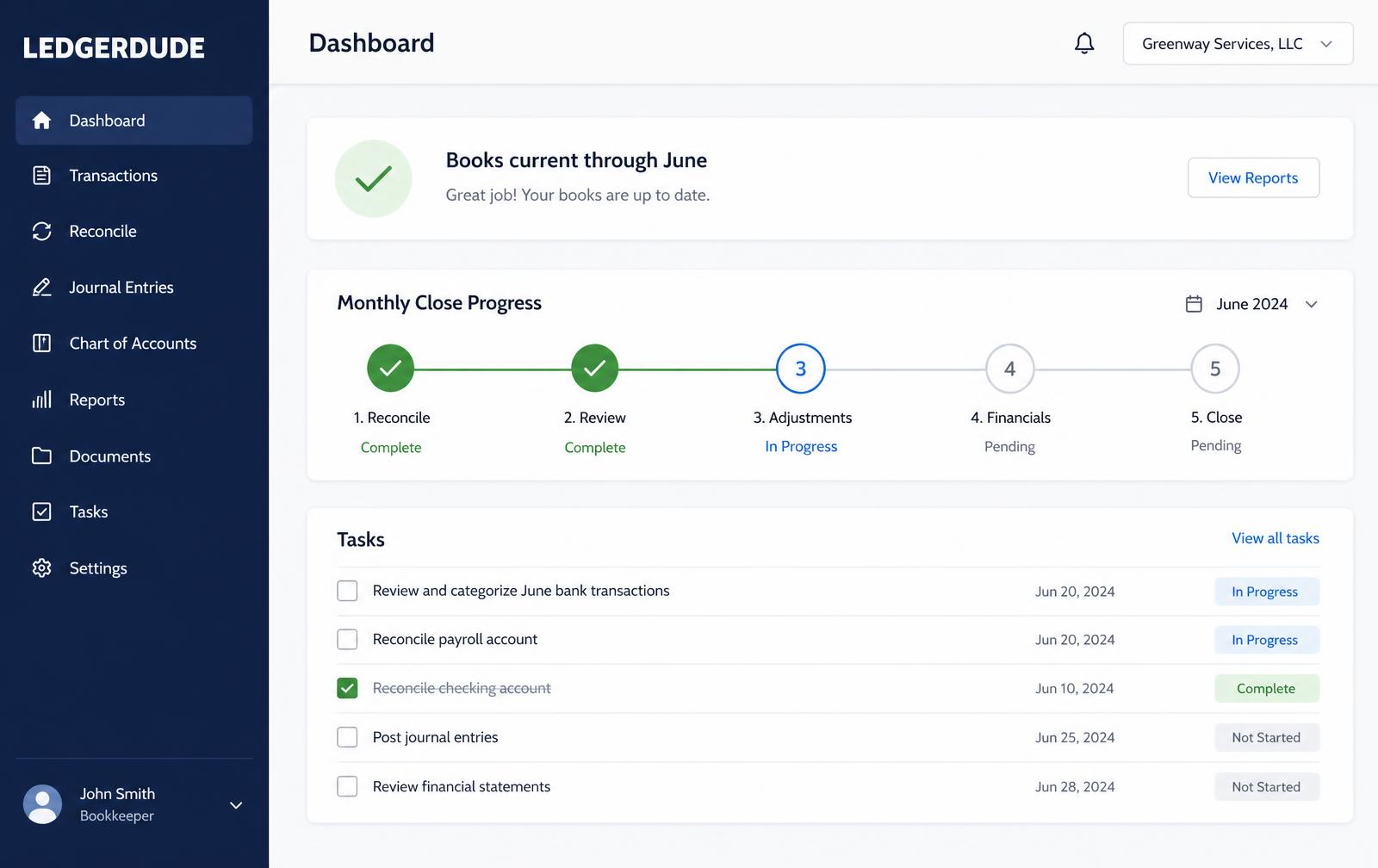
One page with your money in and money out, your cash on hand, and a short list of questions when we need your help.
Questions people ask
Why is my profit high but my bank account low?
Profit excludes loan principal, owner draws, inventory purchases and equipment. All four consume cash without reducing profit.
What is a good net profit margin?
It varies widely by industry — restaurants near 5 percent, professional services 15 to 25 percent. Compare to your own trend first, industry second.
Should I read cash or accrual profit and loss?
Accrual for performance, cash for what actually hit the bank. Reading both takes one extra click.
What does this cost?
One flat monthly price. No hourly bills, no surprises. Founding plans start at $149 a month, and your rate stays locked.
Keep reading
Building a chart of accounts you will actually use
How to structure a chart of accounts so your reports answer real questions — without ending up with two hundred accounts nobody understands.
Bank reconciliation, step by step
How to reconcile a bank account every month: match the statement, chase the differences, and prove the ending balance is real before you close the books.
The accounts receivable workflow that gets you paid
How to invoice, apply payments and chase overdue customers on a schedule, so receivables stay under 45 days and cash arrives when you expect it.
All accounting guide library guides
Every guide in this library.
All guide libraries
Accounting, QuickBooks and catch-up.
Our services
Hand the whole thing to us instead.
Want your books handled for you?
We read your receipts, match your bank activity, and close your books every month. You get one short list of questions and a dashboard that always tells the truth.