
Bookkeeping workflows
Fixed assets and depreciation without the headache
When a purchase is an asset instead of an expense, how depreciation spreads that cost over time, and how to keep a fixed asset schedule your CPA can use.
The short answer
- A purchase becomes a fixed asset when it lasts more than a year and exceeds your capitalization threshold.
- Assets are not expensed at purchase; depreciation spreads the cost across their useful life.
- Depreciation lowers profit without using any cash, which is why profit and cash diverge.
- A fixed asset schedule listing cost, date, life and accumulated depreciation is the record that matters.
Set a capitalization policy and stick to it
Pick a threshold, commonly $2,500, and write it down. Anything above it that lasts beyond a year gets capitalized; anything below is expensed immediately. Consistency matters more than the exact number.
- Vehicles, machinery and equipment: capitalize
- Computers over the threshold: capitalize
- Repairs that keep an asset running: expense
- Improvements that extend useful life: capitalize
How the entries look over time
At purchase, cash or a loan goes down and the asset goes up, with no effect on profit. Each month afterward, depreciation expense increases and accumulated depreciation grows, reducing book value.
Book depreciation versus tax depreciation
Your CPA may use accelerated methods for the tax return while your books use straight line. That difference is normal and expected. Keep the schedule clean and let the tax adjustment happen at filing.
A $60,000 truck across its first year
- Purchase price
- $60,000
- Salvage value
- $10,000
- Useful life
- 5 years
- Monthly depreciation
- $833
- Year one depreciation expense
- $10,000
- Book value after year one
- $50,000
- Cash used in year one
- $0 beyond loan payments
What this tells you: Profit falls by $10,000 while cash barely moves. Expensing the whole truck at purchase would have shown a fake loss in month one and fake profits after.
What you see inside LedgerDude
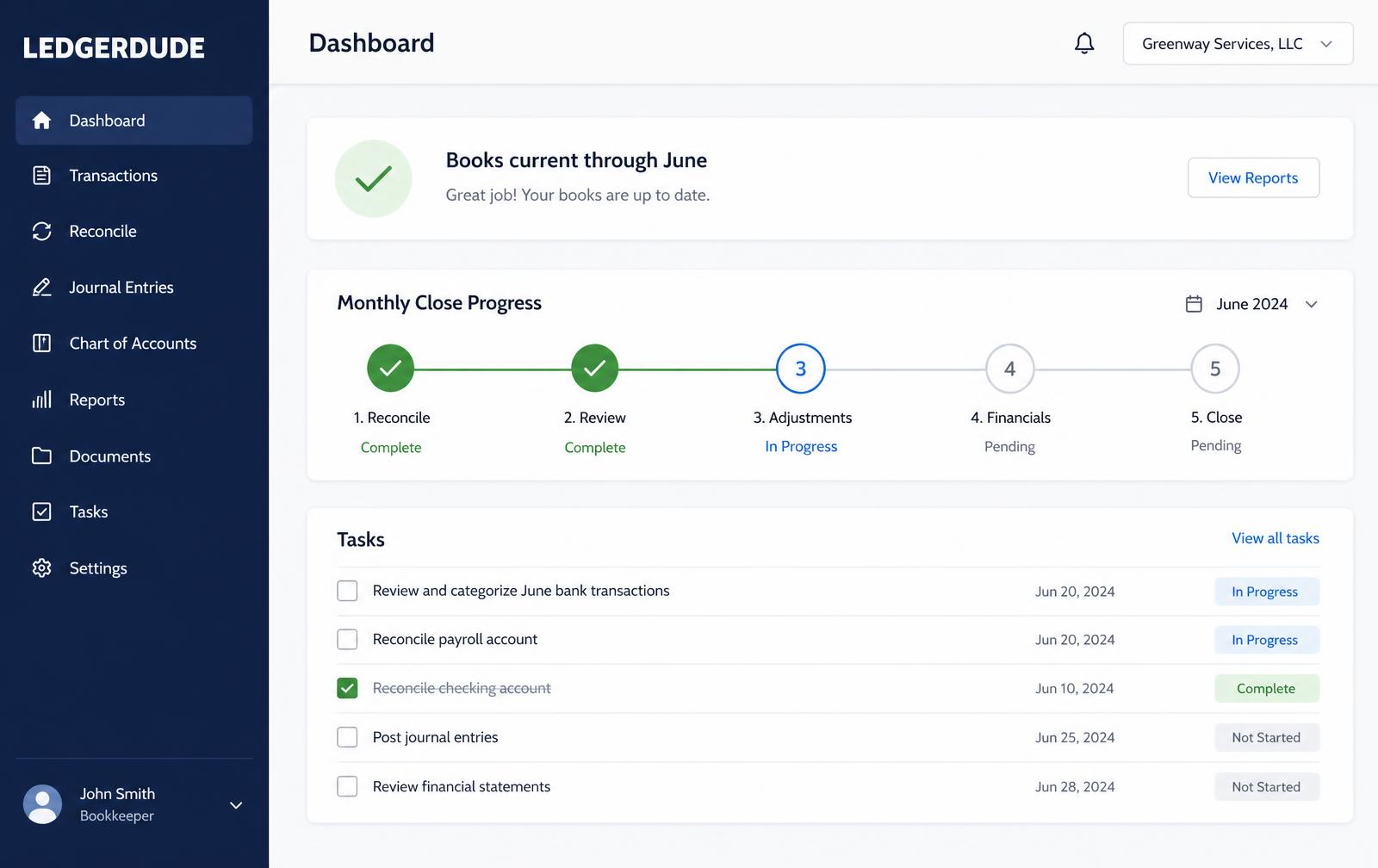
One page with your money in and money out, your cash on hand, and a short list of questions when we need your help.
Add an asset and start depreciating it
- 1
Test the threshold
Confirm the purchase exceeds your capitalization limit and lasts more than a year.
- 2
Record the asset
Post the purchase to a fixed asset account, including delivery and installation costs.
- 3
Set the life
Assign a useful life, such as five years for equipment or seven for furniture.
- 4
Calculate monthly depreciation
Divide cost less salvage value by the life in months.
- 5
Post monthly
Debit depreciation expense and credit accumulated depreciation each month at close.
- 6
Maintain the schedule
Keep one list of every asset with cost, date, life and accumulated depreciation to date.
Questions people ask
What threshold should I use?
$2,500 is a common and defensible choice for small businesses. Document it and apply it consistently.
What happens when I sell an asset?
Remove the cost and its accumulated depreciation, then record a gain or loss for the difference against sale proceeds.
Does depreciation affect cash?
No. It is a non-cash expense, which is why cash flow statements add it back.
What does this cost?
One flat monthly price. No hourly bills, no surprises. Founding plans start at $149 a month, and your rate stays locked.
Keep reading
Inventory and cost of goods sold, step by step
How inventory sits on the balance sheet until it sells, what belongs in cost of goods sold, and how to count and adjust so your margin is believable.
Bank reconciliation, step by step
How to reconcile a bank account every month: match the statement, chase the differences, and prove the ending balance is real before you close the books.
The accounts receivable workflow that gets you paid
How to invoice, apply payments and chase overdue customers on a schedule, so receivables stay under 45 days and cash arrives when you expect it.
All accounting guide library guides
Every guide in this library.
All guide libraries
Accounting, QuickBooks and catch-up.
Our services
Hand the whole thing to us instead.
Want your books handled for you?
We read your receipts, match your bank activity, and close your books every month. You get one short list of questions and a dashboard that always tells the truth.