
Bookkeeping workflows
Inventory and cost of goods sold, step by step
How inventory sits on the balance sheet until it sells, what belongs in cost of goods sold, and how to count and adjust so your margin is believable.
The short answer
- Inventory is an asset until it sells; only then does its cost become cost of goods sold.
- COGS includes purchase cost, freight in and direct labor, not marketing or office overhead.
- Gross margin is revenue minus COGS, and it is the number that shows whether the model works.
- A physical count at least annually is what keeps the inventory balance honest.
The timing rule that changes everything
Buying $40,000 of product does not create a $40,000 expense. It converts cash into inventory. The expense appears only as items sell, matched against the revenue they generated.
What belongs in cost of goods sold
Anything required to get the product ready to sell. Getting this line wrong makes margin look better or worse than reality, and margin drives every pricing decision you make.
- Include: product cost, inbound freight, duties, direct production labor
- Include: packaging that ships with the product
- Exclude: advertising, rent, admin salaries, software
- Exclude: outbound shipping if you treat it as a selling cost, applied consistently
Shrinkage and count adjustments
Real counts rarely match the system exactly. Damage, theft and miscounts create shrinkage, which is written off to COGS or a separate shrinkage account. Tracking it as its own line tells you whether it is a rounding issue or a real problem.
One month of inventory movement
- Beginning inventory
- $86,000
- Purchases plus freight in
- $52,400
- Ending inventory counted
- $71,900
- Cost of goods sold
- $66,500
- Revenue
- $142,000
- Gross margin
- 53.2%
What this tells you: COGS is beginning inventory plus purchases minus ending inventory. Without the count, margin is a guess dressed up as a report.
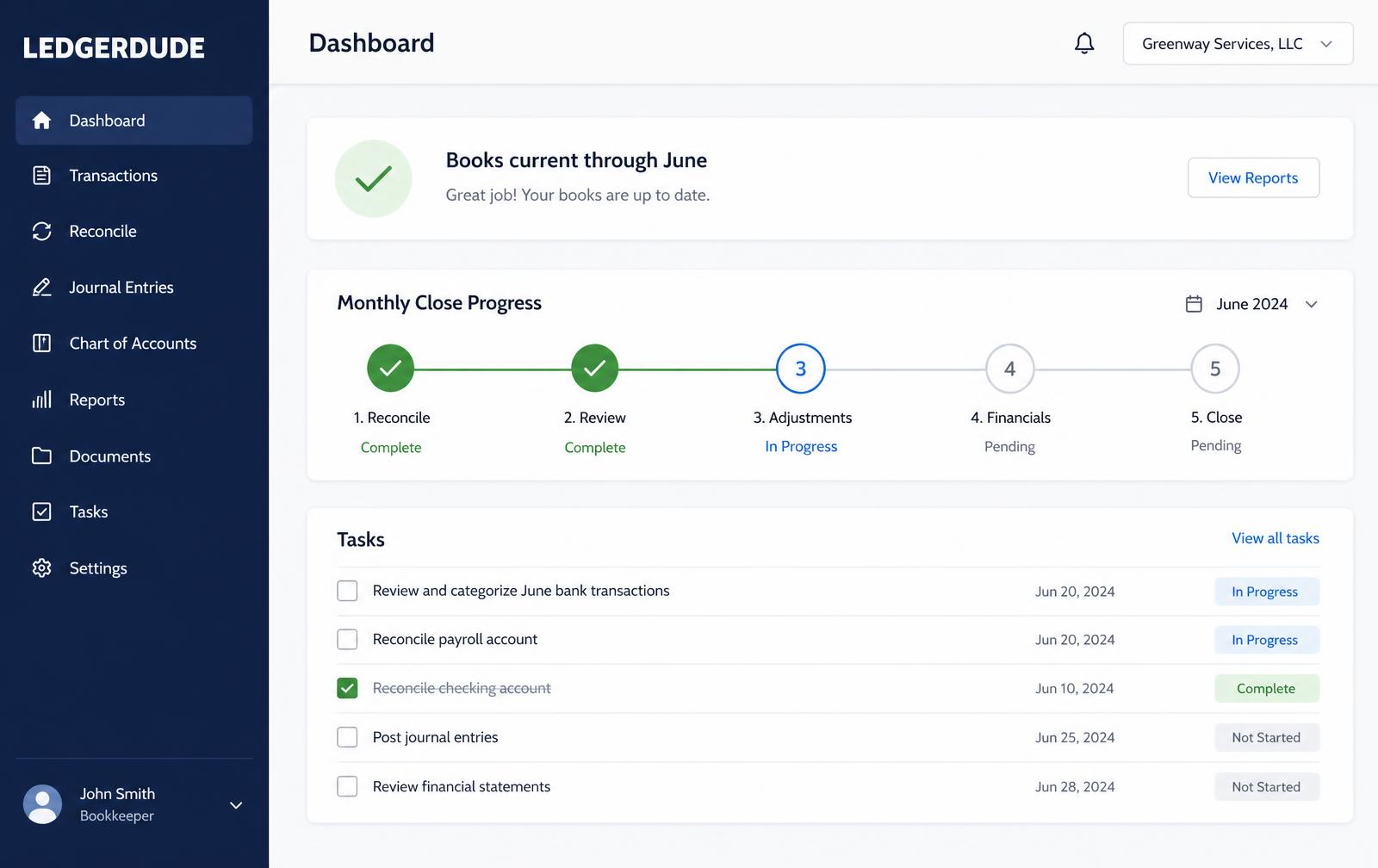
What you see inside LedgerDude
One page with your money in and money out, your cash on hand, and a short list of questions when we need your help.
Close inventory for the month
- 1
Record purchases
Post all inventory purchases to the inventory asset account, including freight in.
- 2
Record sales
Confirm each sale relieved inventory and recorded the matching cost of goods sold.
- 3
Count
Run a full or cycle count of on-hand quantities.
- 4
Value it
Value the count using your costing method and compare it to the ledger balance.
- 5
Adjust
Post a shrinkage adjustment for the difference and note the reason.
- 6
Check margin
Review gross margin against prior months and investigate swings over two points.
Questions people ask
How often should I count?
Annually at minimum. Cycle counting a portion each month catches problems long before year end.
Which costing method should I use?
Most small businesses use average cost or FIFO. Pick one, document it, and do not switch without discussing it with your CPA.
Is shipping to customers part of COGS?
It can be either COGS or a selling expense. Consistency matters more than the choice, because switching makes margin trends meaningless.
What does this cost?
One flat monthly price. No hourly bills, no surprises. Founding plans start at $149 a month, and your rate stays locked.
Keep reading
Bank reconciliation, step by step
How to reconcile a bank account every month: match the statement, chase the differences, and prove the ending balance is real before you close the books.
The accounts receivable workflow that gets you paid
How to invoice, apply payments and chase overdue customers on a schedule, so receivables stay under 45 days and cash arrives when you expect it.
A bill-pay workflow you can run in 20 minutes a week
How to capture bills, get approval, schedule payments and keep vendor records clean without paying anything twice or missing a due date.
All accounting guide library guides
Every guide in this library.
All guide libraries
Accounting, QuickBooks and catch-up.
Our services
Hand the whole thing to us instead.
Want your books handled for you?
We read your receipts, match your bank activity, and close your books every month. You get one short list of questions and a dashboard that always tells the truth.