
Industry
Virtual CFO for agencies and consultants
Deferred revenue, pass-through media spend, utilization and project profitability for service businesses that bill on retainer.
The short answer
- A retainer paid in advance is a liability until the work is delivered. Recognizing it on receipt inflates good months and empties bad ones.
- Pass-through costs like media buys and print should be visible separately so gross margin reflects agency work, not client spend.
- Utilization and effective hourly rate turn a timesheet into a pricing decision.
- Contractor spend needs 1099 tracking from January, not in a scramble each January.
Deferred revenue done properly
Money received before the work is performed sits in deferred revenue and releases as the work is delivered. For a twelve-month retainer that means one-twelfth per month. It smooths reporting and prevents the classic agency mistake of spending cash that belongs to future work.
Pass-through versus agency revenue
When you buy media or print on behalf of a client, that money flows through you. Separating pass-through revenue and pass-through cost lets you read real agency gross margin instead of a number diluted by ad budgets.
Project profitability
Hours applied at a loaded cost rate against project fees answers the question every agency owner has: which clients are worth keeping. Loaded cost means salary plus taxes plus benefits divided by realistically available hours.
Contractors, subscriptions and the slow leak
Software subscriptions and contractor retainers rarely get cancelled. We flag every recurring charge in the close so the leak stays visible.
Numbers worth watching
Each one is plain math you can check yourself.
| Number | How to figure it | Good range | Why it matters |
|---|---|---|---|
| Agency gross margin | (Agency revenue − delivery labor) ÷ agency revenue | 50–65% | Pass-through excluded, this is the real health metric. |
| Utilization | Billable hours ÷ available hours | 60–75% | Below 55 percent means you are carrying capacity you have not sold. |
| Effective hourly rate | Project fee ÷ hours actually spent | At or above target rate | Reveals which fixed-fee projects are silently underpriced. |
| Deferred revenue balance | Unearned retainers on the balance sheet | Tracked monthly | It is the work you owe, and it is not spendable. |
Typical results we see
Agency gross margin
57%
Excluding pass-through media
Utilization
66%
Across delivery staff, not owners
Net margin
14.8%
After owner salary
Revenue per employee
$168,000
Median across agencies we close
A $40,000 retainer month with media pass-through
- Agency fees earned
- $40,000
- Media pass-through billed
- $62,000
- Media pass-through cost
- −$62,000
- Delivery labor at loaded cost
- −$17,400
- Agency gross profit
- $22,600 (56.5%)
- Overhead
- −$14,900
- Net profit
- $7,700
What this tells you: Reporting $102,000 of revenue would look impressive and be misleading. Only $40,000 is agency revenue, and margin should always be measured against that.
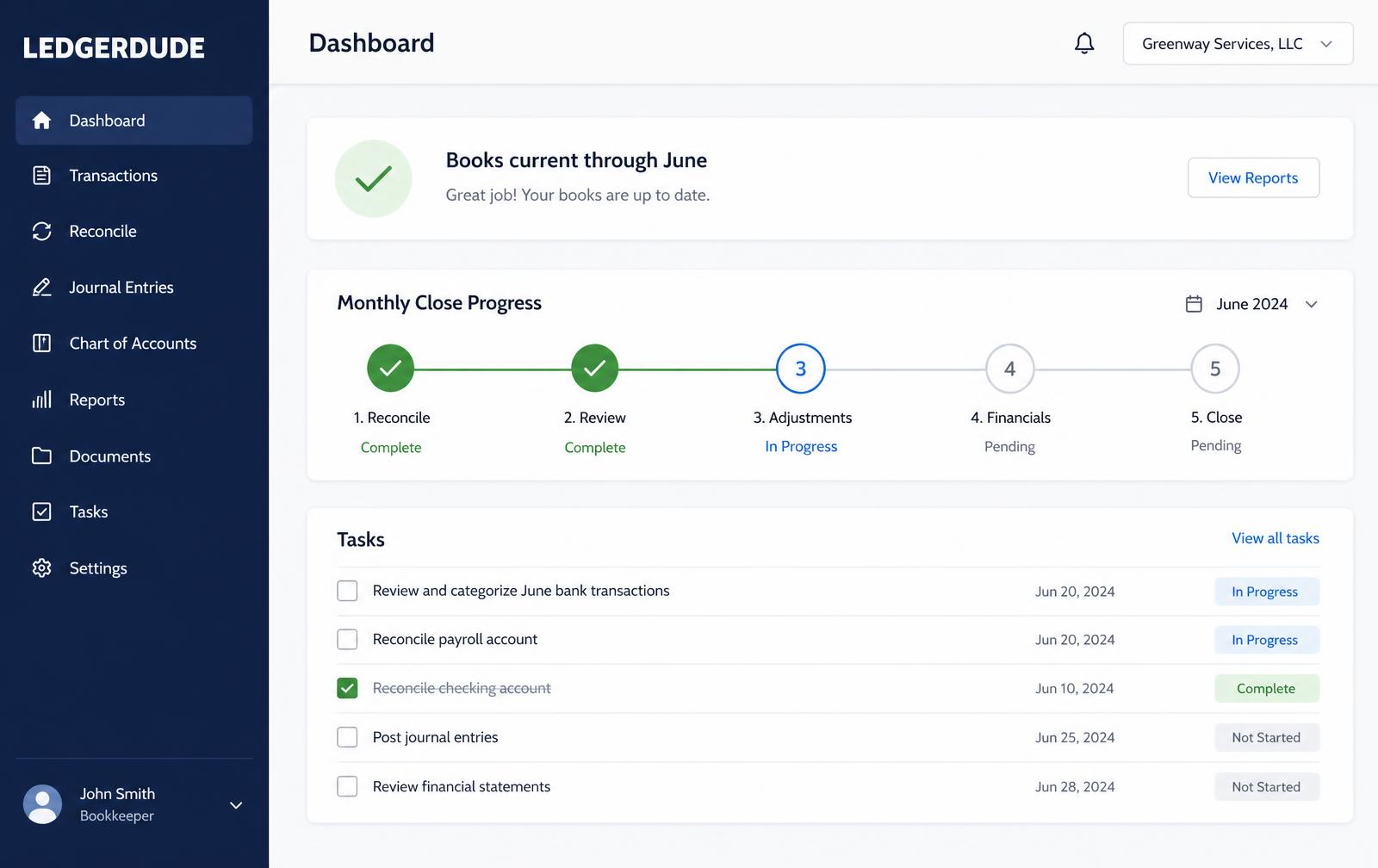
What you see inside LedgerDude
Your numbers on one page, refreshed as your books are closed each month.
Real example
Agency that recognized retainers on receipt
Where they started: Annual contracts were booked as revenue when invoiced, so January looked enormous and Q3 looked like a collapse.
What we did: We moved to deferred revenue, separated pass-through media and added project profitability by client.
How it ended up: Reporting smoothed out and the three lowest-margin clients were repriced instead of dropped.
3
Clients repriced
+11 points
Blended margin
−63%
Cash forecast error
How we set up your accounts
The accounts we build first for this kind of business, so reports read the way you think.
- Agency fee revenue separate from pass-through revenue
- Deferred revenue as a liability for unearned retainers
- Delivery labor separate from administrative payroll
- Contractor payments tracked for 1099 reporting
- Software subscriptions grouped so recurring spend is visible
Questions people ask
When do I recognize a prepaid retainer?
As the work is delivered. Cash received in advance is deferred revenue, a liability, until then.
Should client ad spend appear in my revenue?
If you contract with the media vendor and bill the client, it flows through your books, but it should be reported separately from agency fees so margins stay readable.
How do I know if a fixed-fee project made money?
Divide the fee by the hours actually spent and compare that effective rate to your loaded cost rate. Anything below cost plus target margin needs repricing on renewal.
What does this cost?
One flat monthly price. No hourly bills, no surprises. Founding plans start at $149 a month, and your rate stays locked.
Keep reading
Virtual CFO for restaurants and food trucks
How restaurant and food truck books really work: prime cost, daily sales journal entries, tip liability, third-party delivery fees and food cost swings.
Virtual CFO for construction and contractors
Job costing, retainage, progress billing and work in progress, explained for contractors who need books their bonding agent and banker will accept.
Virtual CFO for ecommerce and online sellers
Marketplace payouts, inventory, cost of goods sold, sales tax nexus and ad spend, handled the way ecommerce books actually need.
All industries
Every business type we have written up.
What we do each month
Our monthly virtual CFO service, step by step.
KPI Library
The numbers that decide whether a month made money.
Want your books handled for you?
We read your receipts, match your bank activity, and close your books every month. You get one short list of questions and a dashboard that always tells the truth.