
Industry
Virtual CFO for CrossFit gyms and boutique fitness studios
Membership revenue, prepaid packages, coach payroll and retail, explained for gym and studio owners who need to know their real monthly recurring revenue.
The short answer
- Membership revenue is only useful when it is read as monthly recurring revenue (MRR), not as whatever hit the bank that month.
- Prepaid class packages and paid-in-full annual memberships are deferred revenue. Booking the cash as income the day it lands overstates the month it was sold and understates every month after.
- Churn, not just new sign-ups, decides whether MRR grows. A studio can sell ten memberships and still shrink if twelve people cancel.
- Coach pay is usually a mix of hourly, per-class and commission. It needs to be tracked as a percentage of the revenue it produces, not lumped into one payroll number.
Why membership revenue gets misread
A gym's bank deposits mix recurring monthly dues, prepaid packages, drop-ins, retail and sometimes a founder's promo. Without separating these, an owner cannot tell if the business is actually growing or just running a good sale month.
- Monthly dues should post as recurring membership revenue, tracked per plan
- Paid-in-full annual memberships get recognized one twelfth per month
- Class packs and punch cards are deferred revenue until classes are used
- Retail (apparel, supplements) needs its own income and cost of goods sold line
MRR and churn, tracked monthly
Monthly recurring revenue is the sum of active membership dues, normalized to a monthly rate. Churn is the percentage of members who cancel or lapse in the period. Together they tell you whether growth is real or a temporary bump from a challenge or referral push.
Prepaid packages as deferred revenue
When a member pays $1,200 for a 20-class pack, that cash is a liability, not income, until classes get used. We book it to deferred revenue and recognize a portion of it each time a class is attended or, for packages without check-in data, evenly over the typical usage period.
Coach payroll and class economics
Coaches are often paid a blend of base pay, per-class rates and revenue share on personal training. We track pay by class type so you can see which time slots and formats are actually profitable once coach cost is measured against the members who showed up.
What LedgerDude does each month
We reconcile your membership software payouts, split dues from packages from retail, recognize deferred revenue on schedule, track coach pay against class attendance, and hand you an MRR and churn report before the 10th.
Numbers worth watching
Each one is plain math you can check yourself.
| Number | How to figure it | Good range | Why it matters |
|---|---|---|---|
| Monthly recurring revenue (MRR) | Sum of active membership dues, normalized to a monthly rate | Growing 2–5% month over month for a healthy studio | The single number that shows whether the membership base is actually expanding. |
| Monthly churn rate | Members who cancel in the month ÷ members at the start of the month | Under 4% per month | Above 5% a month, new sign-ups just replace people walking out the back door. |
| Average revenue per member (ARPM) | Total membership revenue ÷ active members | $140–$220 depending on market and format | Shows whether pricing and add-on sales (personal training, retail) are working. |
| Coach cost as a percentage of class revenue | Coach pay ÷ revenue attributable to classes | 25–35% | Keeps class scheduling tied to what members are actually paying, not just what feels busy. |
Typical results we see
Monthly churn
3.5%
Typical range across the boutique studios we support; yours will vary by contract length
Average revenue per member
$175
Higher for studios with strong personal training attach rates
Coach cost ratio
30%
Excludes owner-coaches who also draw an owner's distribution
Retail gross margin
42%
Apparel and supplement sales combined
A 2-location box with 310 active members
- Membership dues (MRR)
- $46,500
- Class packs recognized
- $3,200
- Retail revenue
- $4,100
- Total revenue
- $53,800
- Coach pay including taxes
- $16,900 (31.4% of class revenue)
- Rent and utilities across both locations
- $12,400
- Software, insurance, other operating costs
- $9,200
- Net income
- $15,300 (28.4%)
What this tells you: Churn was running 5.1 percent, well above the studio's 3.5 percent target, which meant new sign-ups were mostly backfilling losses rather than growing MRR. A renewed onboarding process for the first 60 days brought churn down within two months.
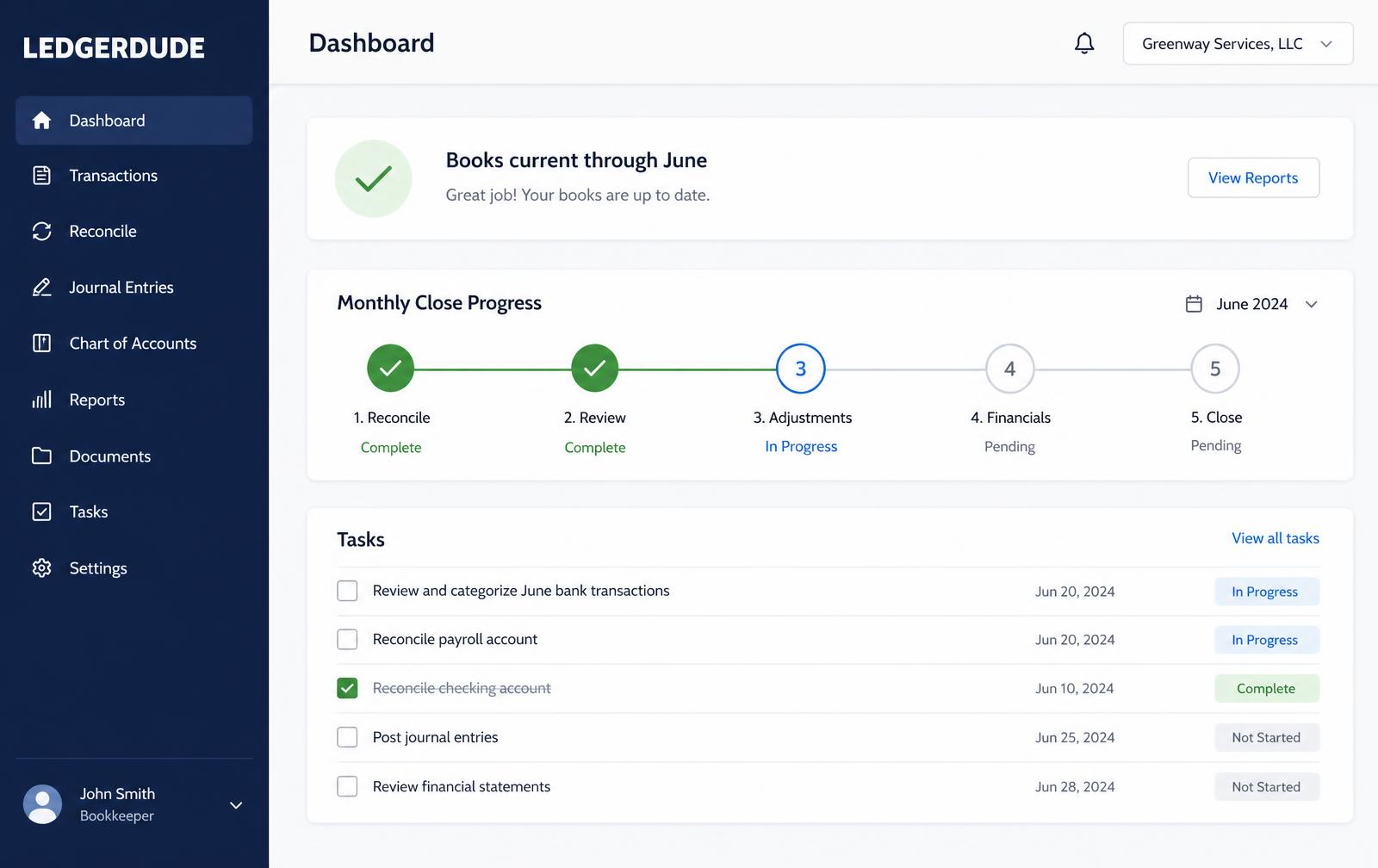
What you see inside LedgerDude
Your numbers on one page, refreshed as your books are closed each month.
Real example
Boutique fitness studio selling packages but booking them as cash income
Where they started: The studio sold six-month unlimited packages paid in full, but the books recorded the full amount as revenue on the day it was paid. Some months looked great, others looked like a crisis, with no relationship to how many people actually walked in.
What we did: We set up a deferred revenue schedule tied to the studio's check-in software, recognizing package revenue as classes were used, and separated dues, packages and retail into their own income accounts.
How it ended up: The owner could finally see a stable, predictable monthly revenue number and used it to plan a second location with a lender that wanted twelve months of consistent numbers.
6-month recognition window
Revenue smoothed across
First real MRR report in 2 years
MRR visibility
5 business days
Time to close
“I finally understand which months are actually good, not just which months someone paid a big check.”
How we set up your accounts
The accounts we build first for this kind of business, so reports read the way you think.
- Membership dues revenue, separate from class packs and retail
- Deferred revenue (liability) for prepaid packages and paid-in-full memberships
- Personal training revenue as its own income account
- Coach pay tracked by class type or session
- Retail cost of goods sold separate from studio operating costs
Questions people ask
How much does a virtual CFO cost for a CrossFit gym or fitness studio?
Most single-location studios pay $300 to $550 a month for a virtual CFO that includes membership software reconciliation, deferred revenue tracking and a monthly MRR and churn report. Multi-location boxes typically run $600 to $1,200.
Should a paid-in-full annual membership be recorded as revenue right away?
No. Record it as deferred revenue when the cash arrives, then recognize one twelfth of it each month the membership is active. Recording it all at once overstates that month and hides how the business is actually performing later in the year.
How do I calculate churn for my gym?
Divide the number of members who canceled or lapsed during the month by the number of active members at the start of the month. Track it monthly, not quarterly, so you catch a bad trend early.
Should personal training revenue be separate from group class dues?
Yes. Track personal training, group memberships, class packs and retail as separate income accounts. Combining them hides which part of the business is actually growing.
How should I pay and track coach compensation?
Track coach pay against the class or session it supports, whether it is hourly, per-class or commission based. That lets you see coach cost as a percentage of the revenue each time slot generates, not just a total payroll figure.
What does this cost?
One flat monthly price. No hourly bills, no surprises. Founding plans start at $149 a month, and your rate stays locked.
Keep reading
Virtual CFO for restaurants and food trucks
How restaurant and food truck books really work: prime cost, daily sales journal entries, tip liability, third-party delivery fees and food cost swings.
Virtual CFO for construction and contractors
Job costing, retainage, progress billing and work in progress, explained for contractors who need books their bonding agent and banker will accept.
Virtual CFO for ecommerce and online sellers
Marketplace payouts, inventory, cost of goods sold, sales tax nexus and ad spend, handled the way ecommerce books actually need.
All industries
Every business type we have written up.
What we do each month
Our monthly virtual CFO service, step by step.
KPI Library
The numbers that decide whether a month made money.
Want your books handled for you?
We read your receipts, match your bank activity, and close your books every month. You get one short list of questions and a dashboard that always tells the truth.