
Quick Answer
What is a good profit margin for a plumbing business?
Healthy gross and net margins for a plumbing company, why service outperforms remodel work, and the pricing habits that keep plumbing margins high.
The short answer
- Plumbing service is labor-heavy, so gross margins of 50 to 60 percent are normal and achievable.
- Remodel, repipe and new construction run 30 to 40 percent because material is a larger share.
- Net profit of 10 to 15 percent is a reasonable target for an established plumbing company.
- Emergency and after-hours work should carry a premium that reflects the real cost of disruption.
The benchmarks
Split the revenue lines before comparing yourself to anything.
- Service and drain: 50% – 60% gross margin
- Water heater and fixture replacement: 40% – 50%
- Repipe and remodel: 30% – 40%
- Net profit: 10% – 15%
Why plumbing can hold higher margins than most trades
A large share of plumbing revenue is skilled labor with modest material cost, and much of it is urgent. Urgency and skill both support price, provided the price is set from loaded cost rather than from what the last shop charged.
Where the margin leaks
Warranty callbacks, unbilled trips to the supply house, and remodel change orders performed on a handshake. Each of them is invisible until revenue is split by line and labor is costed at loaded rates.
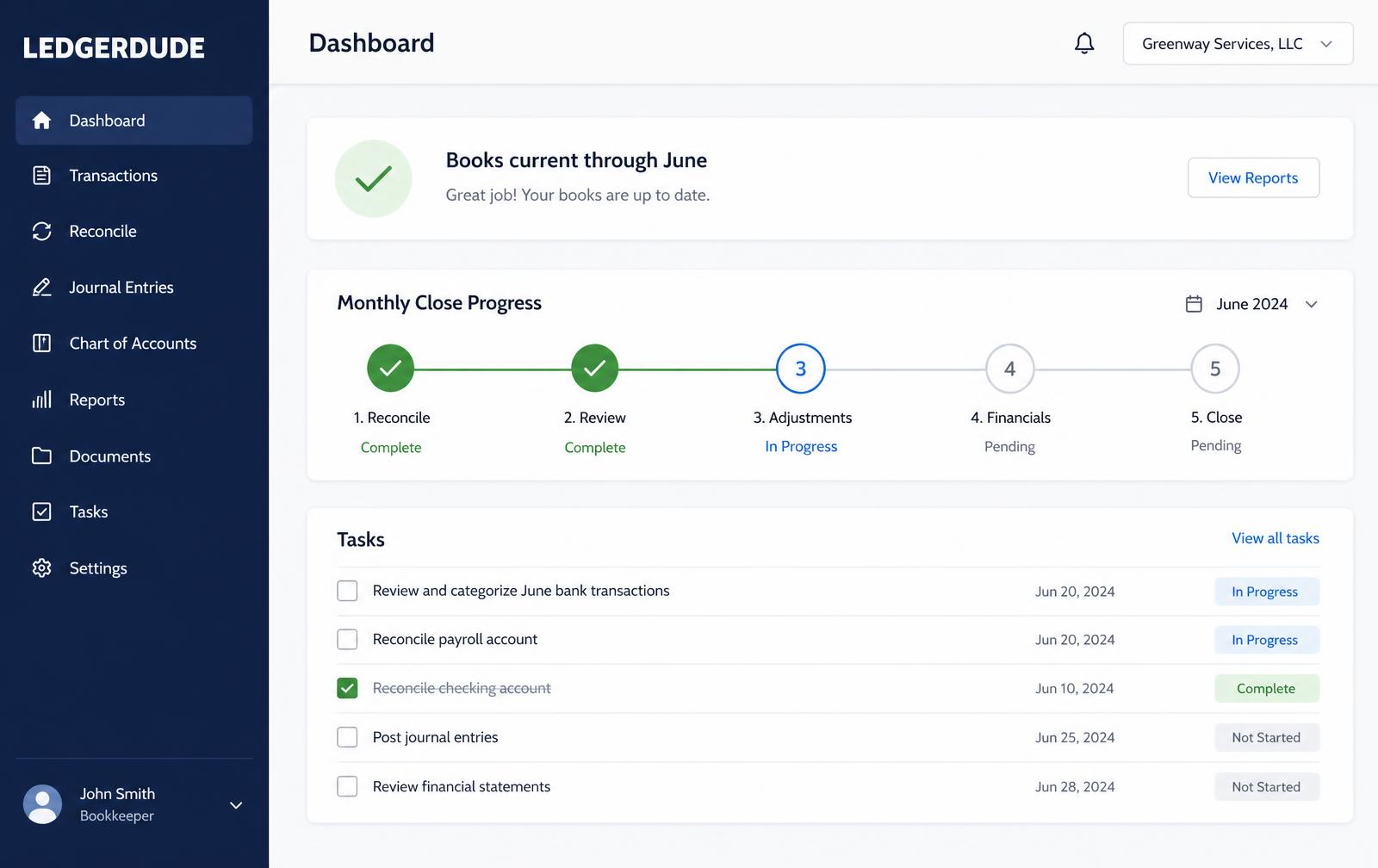
What you see inside LedgerDude
This is the page you get each month once your books are closed — the numbers behind every answer on this site.
In one sentence
Plumbing service work should run 50 to 60 percent gross margin, remodel and repipe work 30 to 40 percent, with 10 to 15 percent net profit for the company.
Related answers
Straight answers to the other questions plumbing owners ask us.
How much should a plumbing company charge per hour?
Work from loaded plumber cost of roughly $60 to $90 an hour, add overhead recovery and target margin, and most residential shops land between $120 and $200 an hour billed.
What is a good profit margin for a contractor?
Most trade contractors should run 25 to 45 percent gross margin depending on how material-heavy the work is, and 8 to 12 percent net profit.
What is labor burden rate and how do you calculate it?
Labor burden is everything an employee costs beyond wages — taxes, insurance, benefits, vehicle and tools — and it usually adds 25 to 60 percent on top of the hourly wage.
How do contractors manage cash flow?
Forecast cash weekly for thirteen weeks, invoice the day work is complete, collect deposits on material-heavy jobs, and keep a cash floor equal to six to eight weeks of outflow.
Run a different trade?
Questions people ask
What should after-hours plumbing work be priced at?
A premium that covers the true cost of calling someone out, typically 1.5x to 2x the standard task price rather than a flat trip fee.
Is 30 percent gross margin acceptable on a repipe?
It can be, because material is a large pass-through. Judge those jobs on gross profit dollars per crew day as well as the percentage.
Why is my net profit low with strong gross margin?
Overhead has grown faster than revenue. Compare overhead as a percentage of revenue against last year, month by month.
What does this cost?
One flat monthly price. No hourly bills, no surprises. Founding plans start at $149 a month, and your rate stays locked.
Keep reading
How much should a plumbing company charge per hour?
Work from loaded plumber cost of roughly $60 to $90 an hour, add overhead recovery and target margin, and most residential shops land between $120 and $200 an hour billed.
What is a good profit margin for a contractor?
Most trade contractors should run 25 to 45 percent gross margin depending on how material-heavy the work is, and 8 to 12 percent net profit.
Contractor CFO services
What we do for plumbing owners every month.
Home services hub
How we set the books up for your trade.
All answers
Every question we have written a straight answer to.
Pricing
Flat monthly plans based on your revenue.
Want your books handled for you?
We read your receipts, match your bank activity, and close your books every month. You get one short list of questions and a dashboard that always tells the truth.