
Quick Answer
What is labor burden rate and how do you calculate it?
How to calculate labor burden rate for a field employee, what belongs in the calculation, and why pricing from wages instead of burdened cost destroys margin.
The short answer
- Labor burden is all employment cost above the wage, expressed as a percentage of that wage.
- For field trades, burden commonly adds 25 to 60 percent once vehicle and tools are included.
- Divide burdened annual cost by actual billable hours, not paid hours, to get true hourly cost.
- Every price built on wages instead of burdened cost is understated from the start.
What belongs in burden
If the person leaving would end the cost, it belongs in their burden.
- Employer payroll taxes
- Workers compensation and liability insurance
- Health insurance and retirement match
- Paid time off and holidays
- Vehicle, fuel, maintenance and insurance
- Phone, tools, uniforms and training
The calculation
Add wages and every burden item for a full year. Divide by the hours that employee actually bills, not the hours you pay them. The gap between those two denominators is the reason burden calculations usually come out too low.
Burden versus overhead
Burden is employee-specific cost that belongs in cost of sales. Overhead is the office, software, advertising and admin pay that exists regardless of who is on the truck. Mixing them makes job margin meaningless.
Illustration: burdened cost per billable hour
- Annual wages at $32/hr × 2,080
- $66,560
- Taxes, insurance, benefits, PTO
- $19,400
- Vehicle, fuel, tools, phone
- $14,200
- Total burdened cost
- $100,160
- Billable hours (1,400 of 2,080)
- $71.54 / billable hour
What this tells you: Example numbers. The wage was $32. The number that belongs in a price is $71.54.
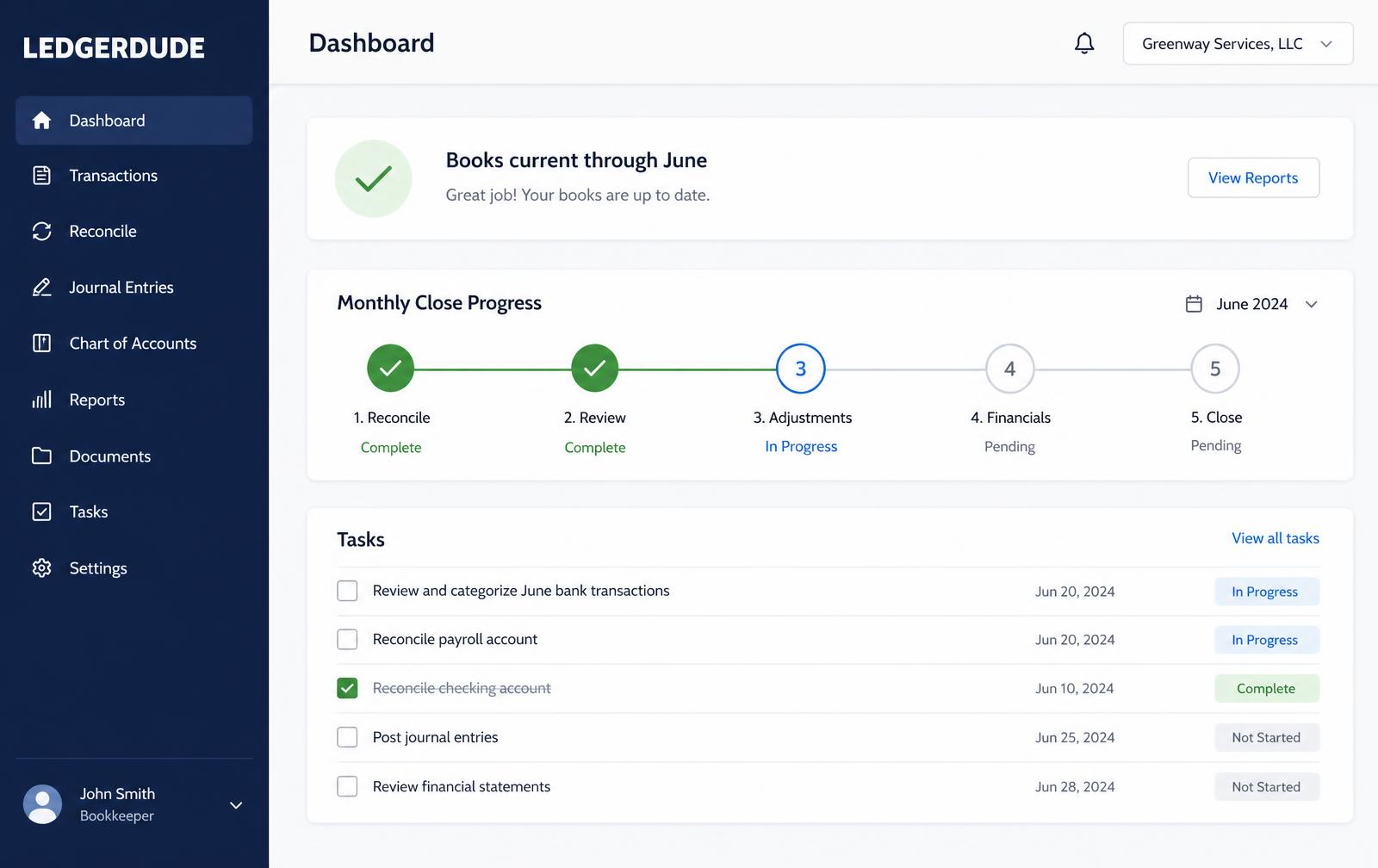
What you see inside LedgerDude
This is the page you get each month once your books are closed — the numbers behind every answer on this site.
In one sentence
Labor burden is everything an employee costs beyond wages — taxes, insurance, benefits, vehicle and tools — and it usually adds 25 to 60 percent on top of the hourly wage.
Related answers
Straight answers to the other questions electrical owners ask us.
What should an electrician charge per hour?
Most electrical contractors need $95 to $175 an hour. Take loaded labor cost per billable hour, add overhead recovery per hour, then divide by one minus your target margin.
How do you bid electrical jobs?
Count material, estimate labor hours at your loaded labor cost, add overhead recovery, then divide the total by one minus your target margin.
What markup should an electrical contractor use?
For a 40 percent margin you need a 67 percent markup on cost. Pick the margin first, then convert: markup = margin ÷ (1 − margin).
What is a good profit margin for an electrical contractor?
Electrical service work should run 45 to 55 percent gross margin, project and new construction work 22 to 32 percent, with 8 to 12 percent net profit.
How do contractors manage cash flow?
Forecast cash weekly for thirteen weeks, invoice the day work is complete, collect deposits on material-heavy jobs, and keep a cash floor equal to six to eight weeks of outflow.
Run a different trade?
Questions people ask
What is a typical burden percentage?
Office roles often run 20 to 30 percent. Field trades run 25 to 60 percent or more once a vehicle is included.
Do subcontractors have burden?
Not employment burden, but they still carry supervision and warranty cost. Price them from their invoice plus your handling and risk.
How often should I recalculate?
Annually, and any time insurance renews or wages change. Burden drifts quietly.
What does this cost?
One flat monthly price. No hourly bills, no surprises. Founding plans start at $149 a month, and your rate stays locked.
Keep reading
What is a good profit margin for a contractor?
Most trade contractors should run 25 to 45 percent gross margin depending on how material-heavy the work is, and 8 to 12 percent net profit.
How much should a plumbing company charge per hour?
Work from loaded plumber cost of roughly $60 to $90 an hour, add overhead recovery and target margin, and most residential shops land between $120 and $200 an hour billed.
How much should an HVAC company charge per hour?
Work backward from the true cost of an hour in the truck — usually $65 to $95 fully loaded — then add your target margin, which puts most residential rates between $125 and $200 an hour.
Electrician CFO services
What we do for electrical owners every month.
Home services hub
How we set the books up for your trade.
All answers
Every question we have written a straight answer to.
Pricing
Flat monthly plans based on your revenue.
Want your books handled for you?
We read your receipts, match your bank activity, and close your books every month. You get one short list of questions and a dashboard that always tells the truth.