
Fort Worth, Texas
Bookkeeping services for Fort Worth small businesses
Fort Worth-specific bookkeeping: logistics and warehousing costs, manufacturing job costing, trades and contractor accounting, and Texas franchise tax filing.
The short answer
- Fort Worth's economy is built on logistics and warehousing, light manufacturing, and a large base of trades and contractors serving the region's growth.
- Logistics and distribution companies need freight and warehousing cost tracked separately from product cost so true landed cost is visible.
- Manufacturers need job or batch costing so material, labor and overhead are attached to what was actually produced, not spread evenly across the month.
- Texas has no personal income tax, but most Fort Worth entities still file a franchise tax report, and Tarrant County property tax bills arrive in October.
- LedgerDude works remotely with Fort Worth businesses through QuickBooks Online.
What is different about Fort Worth books
Fort Worth's growth has been driven by logistics, warehousing and light manufacturing, alongside a steady base of electricians, HVAC companies and other trades serving new residential and commercial development.
- Warehousing and logistics companies need freight, storage and handling tracked apart from product cost
- Manufacturers need labor and overhead allocated to batches or jobs, not averaged across the month
- Trades businesses need job costing tied to specific service calls or installation jobs
- Equipment-heavy businesses need loan payments split between interest and principal so the balance sheet stays accurate
Logistics and warehousing cost tracking
A distribution or logistics company's real margin depends on freight, warehousing and handling costs staying visible and separate from product cost. When those costs get buried in overhead, it is impossible to know whether a client or lane is actually profitable.
Manufacturing job and batch costing
Small manufacturers often price a job based on one estimate and never check it against what actually happened. We attach material, labor and overhead to the job or batch so a real gross margin number comes out the other side, not a guess based on the bid.
Trades and equipment financing
Electricians, HVAC and other trades businesses in Fort Worth often finance trucks and equipment. Loan payments are part principal, part interest, and booking the full payment as an expense overstates costs and understates what you actually owe.
Typical results we see
Fort Worth logistics gross margin
19%
Median for regional carriers and 3PLs
Light manufacturing job margin
27%
Batch-costed shops we support
Trades job margin
24%
Residential and light commercial
A Fort Worth logistics company's lane analysis
- Freight revenue
- $268,000
- Fuel and driver cost
- $142,000
- Warehousing and handling (previously in overhead)
- $31,000
- Corrected gross margin
- $95,000 (35.4%)
What this tells you: Once warehousing and handling were separated from general overhead and attributed to specific lanes, two lanes turned out to be running below break-even, which had been invisible in the combined overhead number.
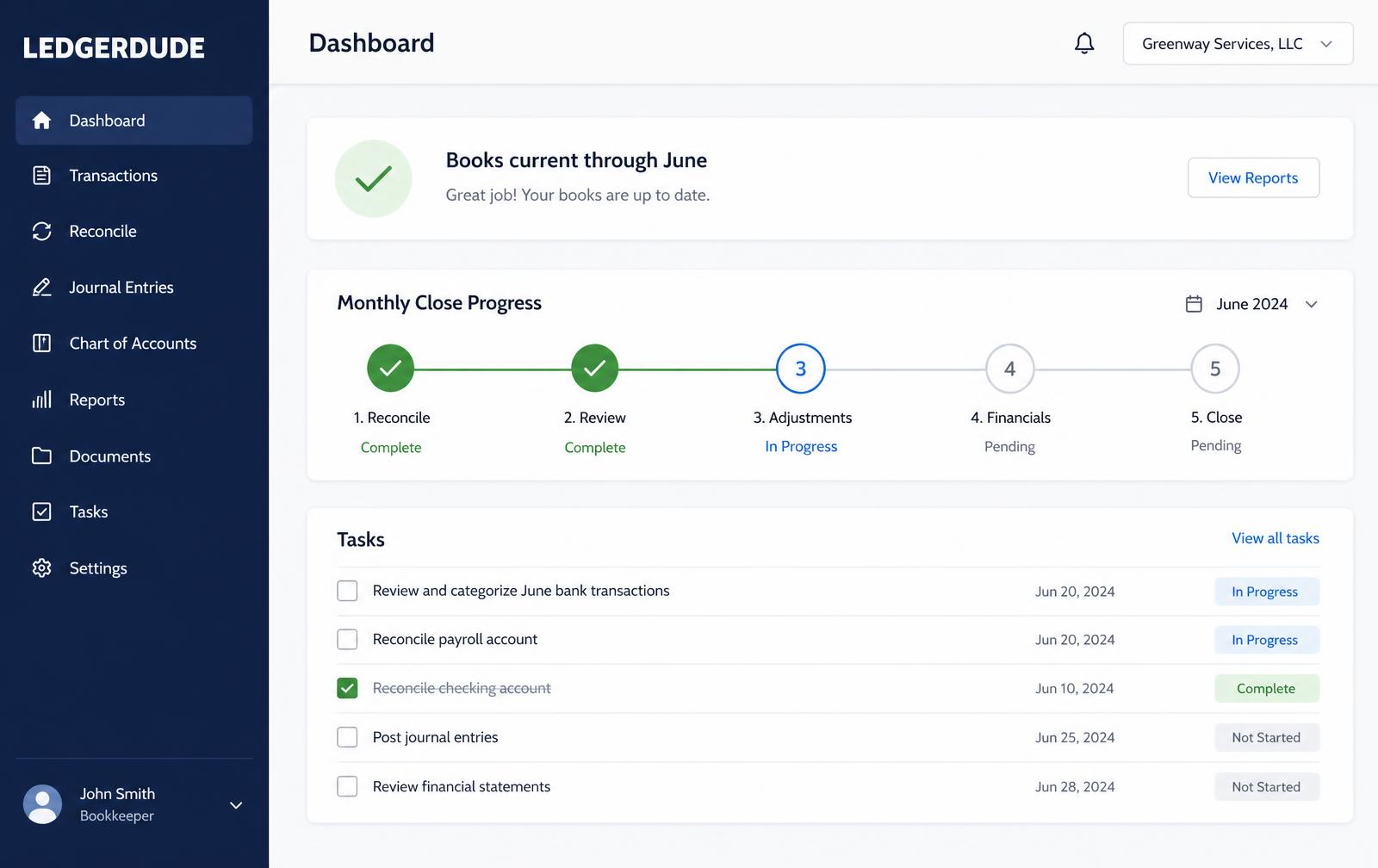
What you see inside LedgerDude
How your Fort Worth numbers look once the books are closed each month.
Real example
Manufacturer pricing every job the same way
Where they started: A metal fabrication shop quoted every job using the same rough labor estimate, without checking actual hours or material use after the job shipped.
What we did: We set up batch costing tied to job numbers, tracked actual material and labor against the estimate, and delivered a job margin report each month.
How it ended up: Two recurring customer job types were found to run below the shop's target margin, and pricing was adjusted on the next quote cycle.
2
Job types repriced
+7 points
Margin improvement on repriced work
6 business days
Close time
What changes for Fort Worth owners
Fort Worth is warehouses, shops and trades, where the difference between a good and bad month is usually labor and freight, not sales.
Freight and delivery costs isolated
Inbound and outbound freight are tracked apart from overhead, so your real cost per shipment is visible.
Shop labor costed to the work
Fabrication and install hours land on jobs, so quoting is based on what the work costs today.
Equipment notes reconciled monthly
Loan principal and interest are split correctly, which keeps both your Balance Sheet and your interest deduction right.
Your next step in Texas
See the price
What bookkeeping costs in Fort Worth
Fort Worth shops with payroll and equipment notes usually land mid-ladder on the plan list.
Bookkeeping prices for Fort Worth businessesSee the proof
Real businesses, real numbers
See how a Fort Worth shop learned which install jobs were actually paying for themselves.
Bookkeeping case studies with real numbersSee what you get
Bookkeeping done for you
See everything included each month, from bank feed sorting through the closed set of reports.
Outsourced bookkeeping services in Fort WorthQuestions from Fort Worth owners
Do you separate freight from overhead?
Yes. Inbound and outbound freight are tracked on their own so your real cost per shipment is visible instead of hidden in overhead.
Can you cost shop labor to jobs?
Yes. Fabrication and install hours land on the job, so quoting reflects what the work costs today rather than last year.
How are equipment loans handled each month?
Loan payments are split between principal and interest, which keeps the Balance Sheet correct and your interest deduction accurate.
Businesses we see most in Fort Worth
Questions people ask
Do I need a bookkeeper in Fort Worth, TX?
Not one down the street. What matters is experience with logistics, manufacturing or trades job costing, whichever fits your business. Everything runs remotely through QuickBooks Online.
How should a manufacturer track job costs?
By batch or job number, attaching material, labor and overhead as the job runs. Comparing that against the original estimate is what tells you whether your pricing actually works.
Why does my logistics company look profitable overall but struggle on some lanes?
Warehousing, fuel and handling costs are often buried in general overhead instead of tracked by lane or client. Separating them out usually reveals one or two unprofitable lanes hiding inside a profitable average.
When are Tarrant County property taxes due?
Bills are typically mailed in October and commonly paid by the end of January. Accruing the expense monthly avoids a distorted December and January.
What does this cost?
One flat monthly price. No hourly bills, no surprises. Founding plans start at $149 a month, and your rate stays locked.
Keep reading
Bookkeeping services for Austin small businesses
Austin-specific bookkeeping: no state income tax but a Texas franchise tax return, food trailer permits, mixed beverage tax and heavy contractor activity.
Bookkeeping services for Nashville small businesses
Nashville-specific bookkeeping: Tennessee franchise and excise tax, business license gross receipts, music industry 1099 volume and short-term rental taxes.
Bookkeeping services for Tampa small businesses
Tampa-specific bookkeeping: Florida sales tax and surtax, commercial rent tax, tangible personal property returns and hurricane-season insurance accounting.
Bookkeeping by city
Every city page we have written.
Our bookkeeping services
What we do for you every month.
Bookkeeping prices for Fort Worth businesses
Flat monthly plans based on your revenue.
Bookkeeping case studies with real numbers
What changed for businesses like yours.
Outsourced bookkeeping services in Fort Worth
Everything included each month, in plain language.
Want your books handled for you?
We read your receipts, match your bank activity, and close your books every month. You get one short list of questions and a dashboard that always tells the truth.