
Quick Answer
What should an electrician charge per hour?
How electrical contractors calculate a billable hourly rate: loaded labor cost, billable hour percentage, overhead recovery per hour, and the margin divisor.
The short answer
- Most electrical contractors need to bill $95 to $175 an hour depending on market and overhead.
- Start from loaded labor cost, not wages: expect $52 to $60 for a $32 an hour electrician.
- Divide loaded cost by billable hour percentage, usually 65 to 75 percent.
- Add overhead per billable hour, then divide by (1 − target margin).
Four steps to your rate
Work in this order and the number comes out defensible.
- Loaded labor cost per paid hour: wages, taxes, benefits, van, tools, insurance
- Divide by billable hour percentage to get cost per billable hour
- Add overhead recovery per billable hour
- Divide the total by (1 − target margin) to get the rate
Billable hours are the step people skip
Drive time, shop time, pickup runs, training and warranty calls are paid but not billed. At 70 percent billable, a $56 loaded cost is really $80 per billable hour before overhead.
Helpers and apprentices need their own rate
One blended rate hides money in both directions. Price each role from its own loaded cost so a two-person call is quoted correctly.
Consider flat rate for service
Flat rate prices the task, not the clock. Customers prefer a known number and you keep the benefit when an experienced tech works fast — but the flat price still has to be built from this hourly math.
Illustration: building a service rate
- Wage
- $32.00 per hour
- Loaded cost (taxes, benefits, van, tools, insurance)
- $56.00 per paid hour
- Cost per billable hour at 70% billable
- $80.00
- Overhead recovery per billable hour
- $28.00
- Total cost per billable hour
- $108.00
- Rate at 35% target margin (÷ 0.65)
- $166 per hour
What this tells you: Example numbers, not a price list. The gap between a $32 wage and a $166 rate is almost entirely cost, not profit.
What you see inside LedgerDude
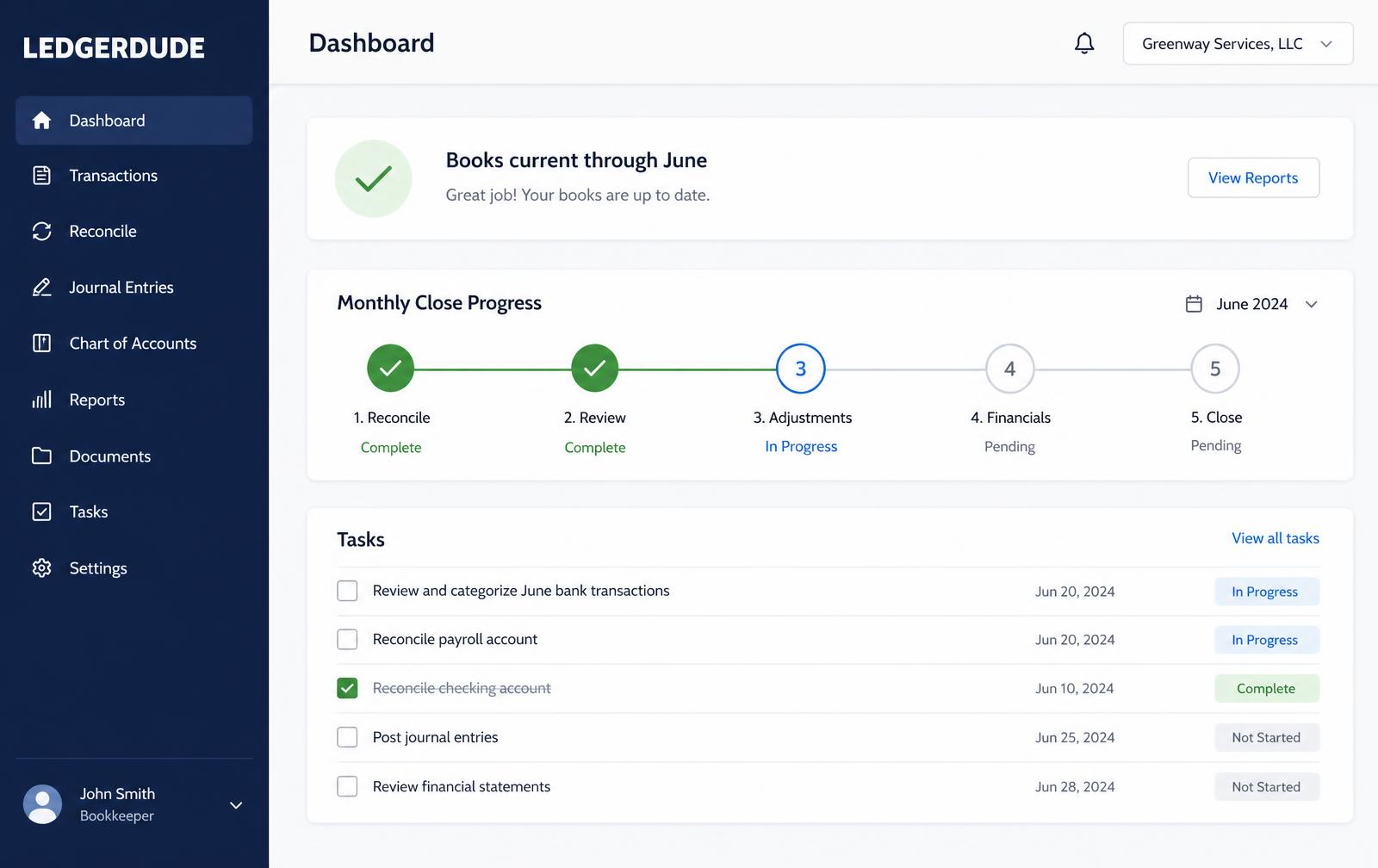
This is the page you get each month once your books are closed — the numbers behind every answer on this site.
In one sentence
Most electrical contractors need $95 to $175 an hour. Take loaded labor cost per billable hour, add overhead recovery per hour, then divide by one minus your target margin.
Find your electrician hourly rate
Put in what one electrician really costs you per hour, how much of their time you can actually bill, and the margin you need. We show the rate to charge and the numbers your books should be watching. Nothing is saved unless you save it.
Base pay before taxes and benefits. A licensed electrician is often $28 to $38.
Payroll taxes, benefits, van, tools and insurance added on top of the wage. 60% to 85% is normal.
Share of paid hours you can actually invoice. Drive time, shop time and warranty eat the rest. 65% to 75% is typical.
Annual overhead (office, advertising, insurance, owner pay) divided by annual billable hours. Often $20 to $35.
Profit you want as a share of the rate. 35% to 45% for service, 18% to 28% for new construction.
Effective rate to charge
$166
Total cost per billable hour divided by (1 − target margin). This is your number.
Profit per billable hour
$58
What each billed hour pays you after all cost.
Target margin
35.0%
Profit as a share of the rate. Healthy electrical service usually lands 35-45%.
Loaded cost per paid hour
$56.00
Wage plus labor burden. This is what one hour truly costs you before billing.
Cost per billable hour
$80.00
Loaded cost spread over the hours you can actually bill.
Overhead per billable hour
$28.00
Your share of office, insurance and advertising recovered each billable hour.
Numbers your books should track
Markup on cost
53.8%
How much you add on top of total cost. 54% markup gives you a 35% margin.
Gross profit per billable hour
$86
Rate minus labor cost. This has to cover overhead before you keep any.
Cost lost to unbillable time
$24.00
Extra cost per billable hour from drive time, shop time and warranty.
Rate vs wage
5.2x
A $32 wage usually needs a 4x to 5x rate. If it is under 3x you are likely losing money.
Cost share of rate
65.0%
Share of the rate that is pure cost. The rest is profit. Healthy work keeps this under 70%.
Break-even rate
$108.00
Charge below this and the hour loses money. No profit, just cost covered.
What if costs move?
Slide these to see what happens to your rate if labor burden or overhead changes and you keep the same margin.
Burden is now 75% instead of 75%.
Overhead is now $28.00 instead of $28.00.
New effective rate
$166
Same target margin, higher cost.
Rate change
$0
Dollars added to or taken off your hourly rate.
Profit per hour then
$58
If you hold the old rate instead, this is what each hour really pays you.
Related answers
Straight answers to the other questions electrical owners ask us.
How do you bid electrical jobs?
Count material, estimate labor hours at your loaded labor cost, add overhead recovery, then divide the total by one minus your target margin.
What markup should an electrical contractor use?
For a 40 percent margin you need a 67 percent markup on cost. Pick the margin first, then convert: markup = margin ÷ (1 − margin).
What is a good profit margin for an electrical contractor?
Electrical service work should run 45 to 55 percent gross margin, project and new construction work 22 to 32 percent, with 8 to 12 percent net profit.
What is labor burden rate and how do you calculate it?
Labor burden is everything an employee costs beyond wages — taxes, insurance, benefits, vehicle and tools — and it usually adds 25 to 60 percent on top of the hourly wage.
How do contractors manage cash flow?
Forecast cash weekly for thirteen weeks, invoice the day work is complete, collect deposits on material-heavy jobs, and keep a cash floor equal to six to eight weeks of outflow.
Run a different trade?
Questions people ask
Why is my rate so much higher than my electrician's wage?
Because the rate covers payroll taxes, benefits, the van, tools, insurance, unbillable hours, the office and profit. The wage is roughly a third of it.
Should I charge a trip or diagnostic fee?
Yes. A truck roll has real cost whether or not work is approved, and a diagnostic fee keeps you from funding free troubleshooting.
How often should I raise my rate?
Review yearly and after any material change in wages or insurance. Small annual increases stick far better than a big correction every few years.
What does this cost?
One flat monthly price. No hourly bills, no surprises. Founding plans start at $149 a month, and your rate stays locked.
Keep reading
What is a good profit margin for an electrical contractor?
Electrical service work should run 45 to 55 percent gross margin, project and new construction work 22 to 32 percent, with 8 to 12 percent net profit.
How do you bid electrical jobs?
Count material, estimate labor hours at your loaded labor cost, add overhead recovery, then divide the total by one minus your target margin.
What is labor burden rate and how do you calculate it?
Labor burden is everything an employee costs beyond wages — taxes, insurance, benefits, vehicle and tools — and it usually adds 25 to 60 percent on top of the hourly wage.
Electrician CFO services
What we do for electrical owners every month.
Home services hub
How we set the books up for your trade.
All answers
Every question we have written a straight answer to.
Pricing
Flat monthly plans based on your revenue.
Want your books handled for you?
We read your receipts, match your bank activity, and close your books every month. You get one short list of questions and a dashboard that always tells the truth.