
Quick Answer
How does job costing work for an HVAC company?
How HVAC job costing works, what has to be tagged to a job, and how to start without rebuilding your whole accounting system.
The short answer
- Job costing assigns labor, materials and subcontractor cost to individual jobs.
- Labor must be posted at loaded cost, not wage, or every job looks more profitable than it is.
- Start with installs only; they carry the largest dollars and the biggest surprises.
- The payoff is knowing which job type, crew or customer segment to sell more of.
What gets tagged to a job
Four cost types, consistently applied, produce a usable job margin.
- Labor hours at fully loaded cost, including drive and callback time
- Equipment and materials, including freight and returns
- Subcontractor invoices, such as crane, electrical or duct cleaning
- Permits, disposal and rental fees
Loaded labor or nothing
Posting a tech at their $32 wage instead of a $78 loaded cost inflates every job margin by a wide gap. Job costing built on wage-only labor produces confident, wrong decisions.
Start with installs
Installs are where thousands of dollars can swing on one bad estimate. Cost those first, learn the pattern, then extend to service work once the habit sticks.
Close the loop
Compare estimated hours to actual hours on every job for one quarter. The gap between them is usually worth more than any pricing change.
Illustration: two installs, same invoice
- Invoice
- $9,400 each
- Job A cost (14 loaded hours + equipment)
- $6,050
- Job B cost (23 loaded hours + rework)
- $7,880
- Job A gross margin
- 35.6%
- Job B gross margin
- 16.2%
What this tells you: Example numbers. Averaged together these look like a 26 percent month, which hides the job that needed attention.
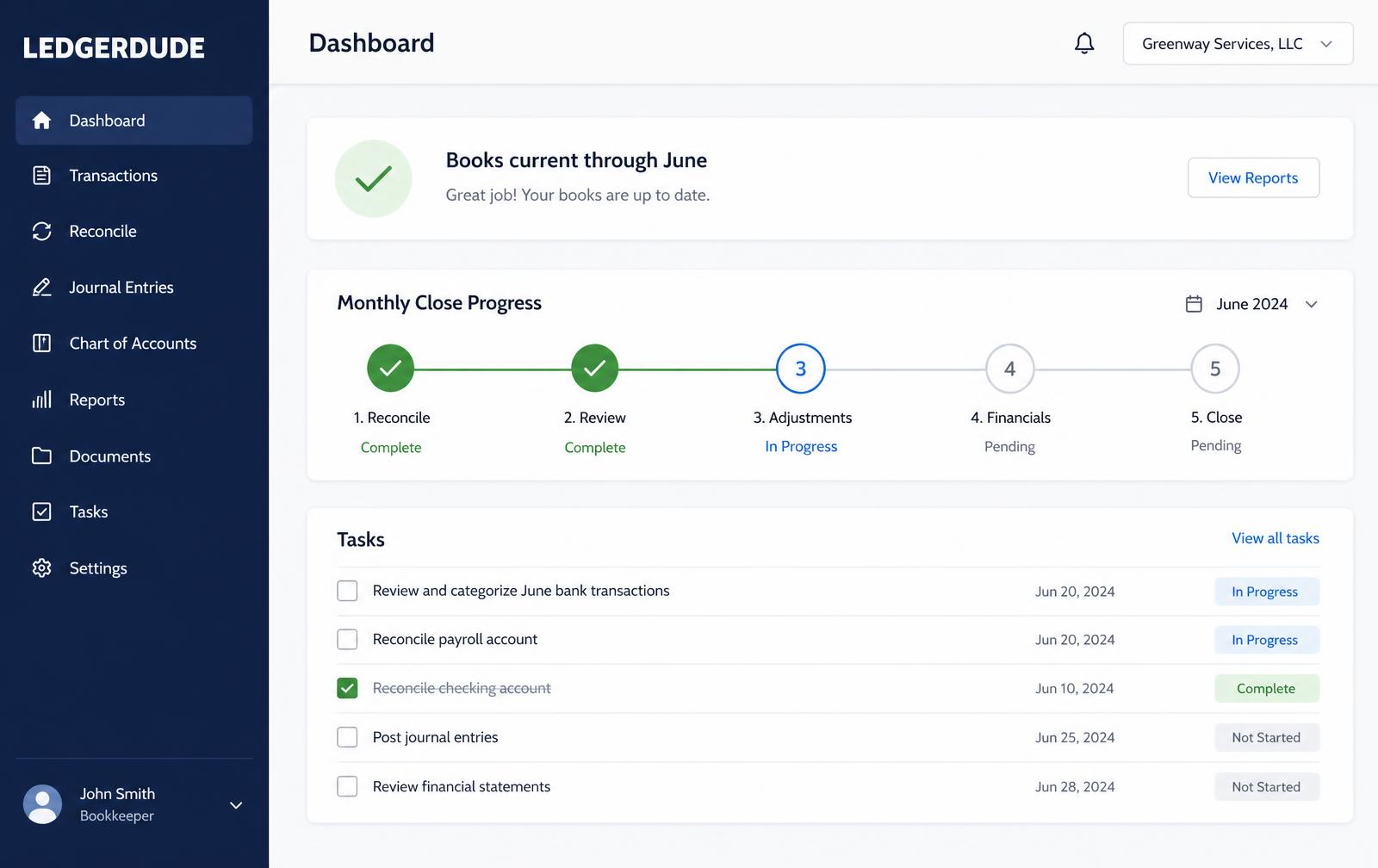
What you see inside LedgerDude
This is the page you get each month once your books are closed — the numbers behind every answer on this site.
In one sentence
Job costing tags every labor hour, part and subcontractor cost to a specific job so you can see the gross profit of that job instead of a monthly average.
Try it with your own numbers
Use one month, one quarter, or one job. Nothing is saved and nothing is sent anywhere.
What customers paid you.
Units, parts, filters, refrigerant.
Wages, payroll taxes and benefits for time on jobs.
Office, trucks, ads, software, owner pay.
Commissions, permits, subs, disposal — anything that only happens when you do a job.
How many jobs or calls you completed in this period.
Hours your techs actually spent on customer work.
Your target: cents of profit per dollar of sales, after everything.
Gross margin
33.3%
$40,000 left after job costs
Net profit margin
15.0%
$18,000 left after everything
Job costs
66.7%
$80,000 of materials and labor
Materials share
31.7%
Healthy HVAC shops sit near 25–35%.
Labor share
35.0%
Healthy HVAC shops sit near 25–35%.
Overhead share
18.3%
Aim to keep this under 30%.
Contribution margin and labor productivity
Contribution margin
28.3%
$34,000 left to cover overhead and profit
Contribution per job
$243
$857 average sale per job
Sales per labor dollar
$2.86
Most healthy shops make $3 or more of sales per $1 of tech pay.
Sales per tech hour
$109
Your billable rate in real life, after slow days.
Gross profit per tech hour
$36
What one hour of tech time really earns you.
Hours to cover overhead
605 hrs
Tech hours needed before the shop starts making money.
What if costs move?
Drag a slider to see what happens to your margin if labor or materials go up or down.
$42,000 of tech labor
$38,000 of materials
Gross margin, what-if
33.3%
+0.0 points vs now
Net profit, what-if
15.0%
$18,000 left after everything
Both sliders are at zero, so this matches your numbers above.
Your 12% profit target
You are already there. These numbers keep 15.0% after everything.
What this means
Close, but thin. A few points of price or less overhead makes a big difference.
At this margin you need about $66,000 in sales just to break even.
Numbers to watch every month
- • Gross margin per job type — service work should beat installs.
- • Contribution margin — what is left after every cost that moves with the work.
- • Sales and gross profit per tech hour — the fastest read on productivity.
- • Labor cost as a share of sales, including payroll taxes and benefits.
- • Overhead share of sales — it should shrink as you grow.
- • Unpaid customer invoices over 30 days old.
- • Cash in the bank compared with one month of costs.
Related answers
Straight answers to the other questions hvac owners ask us.
How do you price HVAC jobs?
Start from the loaded cost of the job — labor hours, parts, and a share of overhead — then divide by one minus your target margin to get the price.
What is a good profit margin for an HVAC business?
Aim for 45% to 55% gross margin on service, 30% to 40% on installs, and 8% to 12% net profit for the whole company.
What markup should HVAC companies use on parts and equipment?
Most HVAC companies mark parts up 2x to 3x cost and equipment 1.4x to 1.8x, which lands them at 30 to 55 percent gross margin depending on the work.
What KPIs should an HVAC company track?
Track average ticket, gross margin by revenue line, billable hour percentage, close rate, maintenance agreement count and weeks of cash on hand.
How should I price HVAC maintenance agreements?
Price from the loaded cost of the visits plus your target margin — commonly $180 to $360 a year for two visits on one system — and treat the pull-through repair work as a bonus, not a subsidy.
Run a different trade?
Questions people ask
Do I need special software for job costing?
Not to start. Consistent job or class tagging in your accounting file plus hours from your field software will get you most of the way.
How do I cost warranty and callback work?
Tag it to the original job. Otherwise callbacks quietly land in overhead and the job that caused them still looks profitable.
How often should I review job costs?
Monthly for the trend, and immediately after any job that felt wrong. Owner instinct plus a costed job is a fast learning loop.
What does this cost?
One flat monthly price. No hourly bills, no surprises. Founding plans start at $149 a month, and your rate stays locked.
Keep reading
What is a good profit margin for an HVAC business?
Aim for 45% to 55% gross margin on service, 30% to 40% on installs, and 8% to 12% net profit for the whole company.
What KPIs should an HVAC company track?
Track average ticket, gross margin by revenue line, billable hour percentage, close rate, maintenance agreement count and weeks of cash on hand.
What is a good profit margin for a contractor?
Most trade contractors should run 25 to 45 percent gross margin depending on how material-heavy the work is, and 8 to 12 percent net profit.
HVAC CFO services
What we do for hvac owners every month.
HVAC bookkeeping hub
How we set the books up for your trade.
All answers
Every question we have written a straight answer to.
Pricing
Flat monthly plans based on your revenue.
Want your books handled for you?
We read your receipts, match your bank activity, and close your books every month. You get one short list of questions and a dashboard that always tells the truth.