
Quick Answer
What markup should HVAC companies use?
Typical HVAC markup on parts and equipment, the difference between markup and margin, and how to check your multiplier against the margin you actually need.
The short answer
- Markup and margin are not the same number; a 50 percent markup is only a 33 percent margin.
- Common HVAC parts markup runs 2x to 3x cost; equipment usually runs 1.4x to 1.8x.
- Set the multiplier from the margin you need, not from what a supplier rep suggests.
- Low-cost parts carry the highest multiplier because handling cost is the same regardless of price.
Markup versus margin
Markup is measured against your cost. Margin is measured against the price. A $100 part sold at $150 is a 50 percent markup and a 33 percent margin. Every pricing mistake we find starts with those two words being used interchangeably.
- Margin 30% = 1.43x cost
- Margin 40% = 1.67x cost
- Margin 50% = 2.00x cost
- Margin 60% = 2.50x cost
- Margin 66% = 3.00x cost
Why cheap parts get the biggest multiplier
Sourcing, stocking and carrying a $6 capacitor costs about the same as a $600 board. A flat percentage on both underprices the small parts, which is why sliding scales are standard: small parts at 3x or more, mid-range at 2x, large equipment closer to 1.5x.
Sanity-check your multiplier against the books
Pull last month's gross margin by revenue line. If service margin is under 45 percent while your parts multiplier looks healthy, the leak is unbilled labor hours rather than markup.
Illustration: a sliding parts matrix
- Cost under $25
- 3.5x
- $25 – $100
- 2.8x
- $100 – $500
- 2.0x
- $500 – $2,000
- 1.7x
- Over $2,000 (equipment)
- 1.4x – 1.5x
What this tells you: Example matrix. The point is the slope: handling cost is flat, so cheaper parts must carry more.
What you see inside LedgerDude
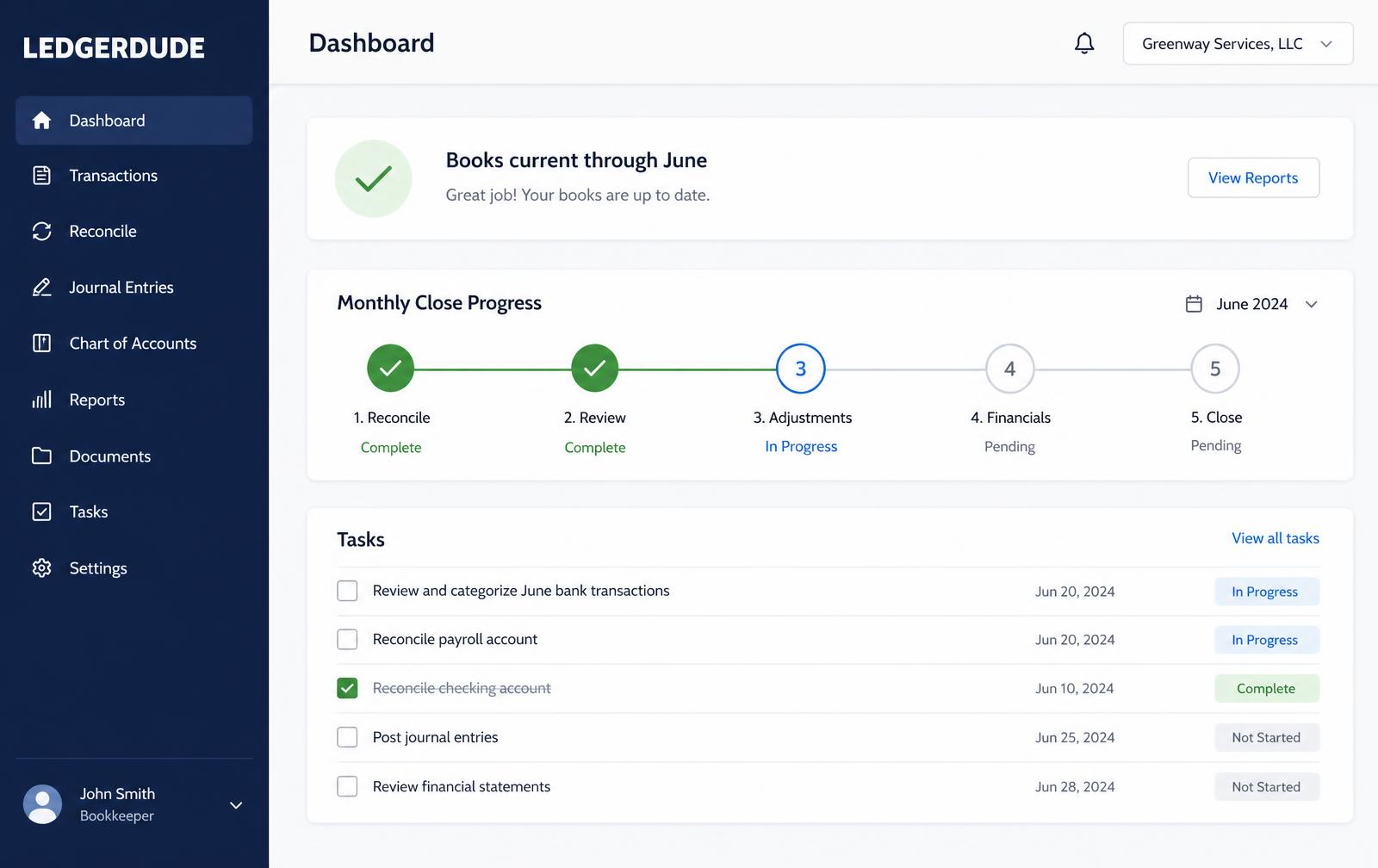
This is the page you get each month once your books are closed — the numbers behind every answer on this site.
In one sentence
Most HVAC companies mark parts up 2x to 3x cost and equipment 1.4x to 1.8x, which lands them at 30 to 55 percent gross margin depending on the work.
Try it with your own numbers
Use one month, one quarter, or one job. Nothing is saved and nothing is sent anywhere.
What customers paid you.
Units, parts, filters, refrigerant.
Wages, payroll taxes and benefits for time on jobs.
Office, trucks, ads, software, owner pay.
Commissions, permits, subs, disposal — anything that only happens when you do a job.
How many jobs or calls you completed in this period.
Hours your techs actually spent on customer work.
Your target: cents of profit per dollar of sales, after everything.
Gross margin
33.3%
$40,000 left after job costs
Net profit margin
15.0%
$18,000 left after everything
Job costs
66.7%
$80,000 of materials and labor
Materials share
31.7%
Healthy HVAC shops sit near 25–35%.
Labor share
35.0%
Healthy HVAC shops sit near 25–35%.
Overhead share
18.3%
Aim to keep this under 30%.
Contribution margin and labor productivity
Contribution margin
28.3%
$34,000 left to cover overhead and profit
Contribution per job
$243
$857 average sale per job
Sales per labor dollar
$2.86
Most healthy shops make $3 or more of sales per $1 of tech pay.
Sales per tech hour
$109
Your billable rate in real life, after slow days.
Gross profit per tech hour
$36
What one hour of tech time really earns you.
Hours to cover overhead
605 hrs
Tech hours needed before the shop starts making money.
What if costs move?
Drag a slider to see what happens to your margin if labor or materials go up or down.
$42,000 of tech labor
$38,000 of materials
Gross margin, what-if
33.3%
+0.0 points vs now
Net profit, what-if
15.0%
$18,000 left after everything
Both sliders are at zero, so this matches your numbers above.
Your 12% profit target
You are already there. These numbers keep 15.0% after everything.
What this means
Close, but thin. A few points of price or less overhead makes a big difference.
At this margin you need about $66,000 in sales just to break even.
Numbers to watch every month
- • Gross margin per job type — service work should beat installs.
- • Contribution margin — what is left after every cost that moves with the work.
- • Sales and gross profit per tech hour — the fastest read on productivity.
- • Labor cost as a share of sales, including payroll taxes and benefits.
- • Overhead share of sales — it should shrink as you grow.
- • Unpaid customer invoices over 30 days old.
- • Cash in the bank compared with one month of costs.
Related answers
Straight answers to the other questions hvac owners ask us.
How do you price HVAC jobs?
Start from the loaded cost of the job — labor hours, parts, and a share of overhead — then divide by one minus your target margin to get the price.
What is a good profit margin for an HVAC business?
Aim for 45% to 55% gross margin on service, 30% to 40% on installs, and 8% to 12% net profit for the whole company.
What KPIs should an HVAC company track?
Track average ticket, gross margin by revenue line, billable hour percentage, close rate, maintenance agreement count and weeks of cash on hand.
How does job costing work for an HVAC company?
Job costing tags every labor hour, part and subcontractor cost to a specific job so you can see the gross profit of that job instead of a monthly average.
How should I price HVAC maintenance agreements?
Price from the loaded cost of the visits plus your target margin — commonly $180 to $360 a year for two visits on one system — and treat the pull-through repair work as a bonus, not a subsidy.
Run a different trade?
Questions people ask
Is 3x markup on a small part unfair to the customer?
The customer is buying a stocked part installed today by a trained tech, not the part alone. What matters is that the total price is clear before work starts.
Should equipment carry the same markup as parts?
No. Equipment moves large dollars with little added handling, so it carries a lower multiplier and a lower margin percentage while still producing more gross profit dollars.
How do I know my markup is working?
Look at gross margin by revenue line each month. Markup is the input; margin is the score.
What does this cost?
One flat monthly price. No hourly bills, no surprises. Founding plans start at $149 a month, and your rate stays locked.
Keep reading
How do you price HVAC jobs?
Start from the loaded cost of the job — labor hours, parts, and a share of overhead — then divide by one minus your target margin to get the price.
What is a good profit margin for an HVAC business?
Aim for 45% to 55% gross margin on service, 30% to 40% on installs, and 8% to 12% net profit for the whole company.
HVAC CFO services
What we do for hvac owners every month.
HVAC bookkeeping hub
How we set the books up for your trade.
All answers
Every question we have written a straight answer to.
Pricing
Flat monthly plans based on your revenue.
Want your books handled for you?
We read your receipts, match your bank activity, and close your books every month. You get one short list of questions and a dashboard that always tells the truth.